

6 Haunting Folklore Books for Dark Winter Nights
Ghosts, witches, wells and the stories we tell when the nights draw in

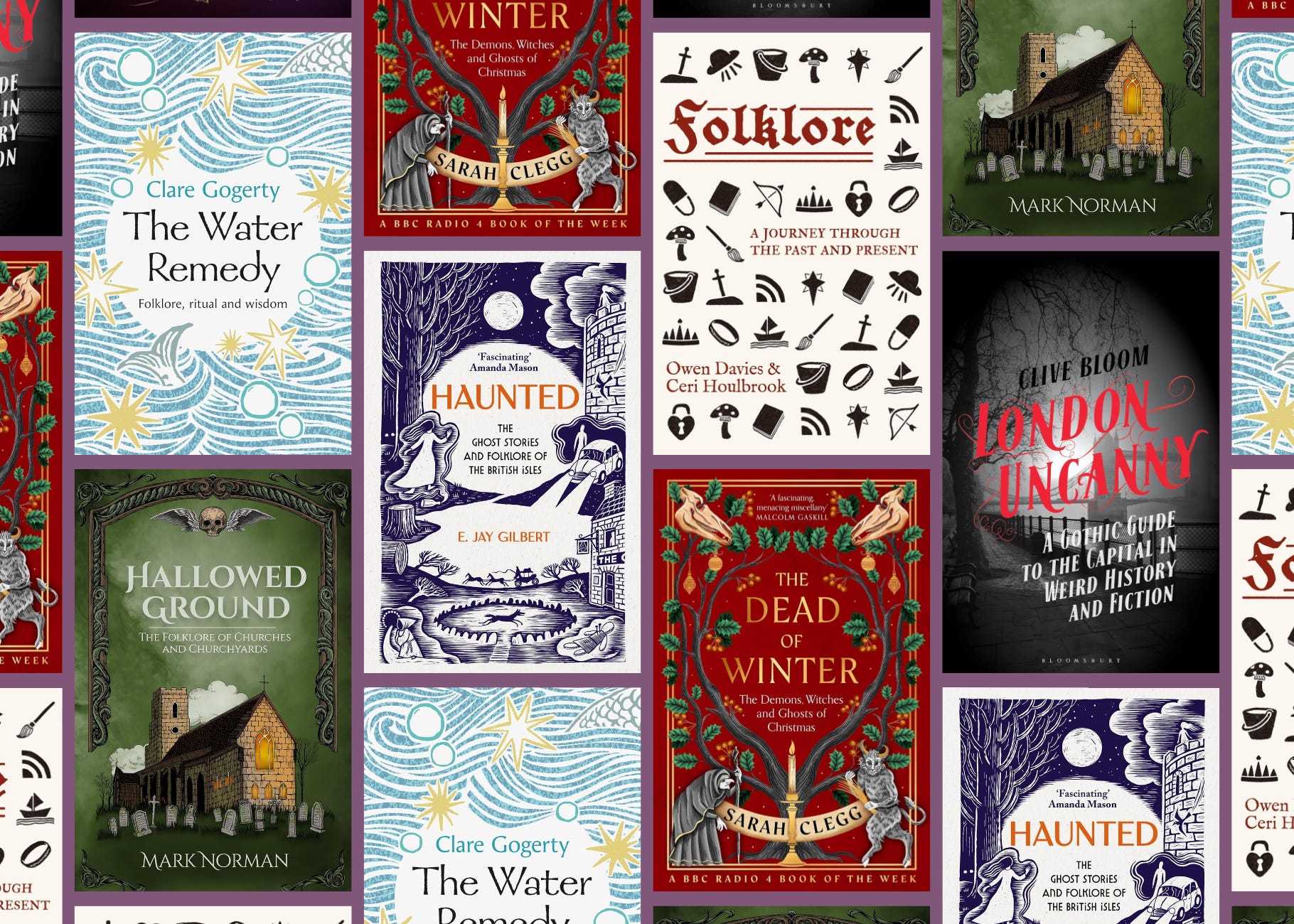
December is supposed to be all twinkly lights and novelty pyjamas, but it’s also the time of year when the dark wins. The afternoons vanish, the heating goes on, and suddenly you’re sitting in a small circle of lamplight while the rest of the house feels a bit… elsewhere.
It’s no coincidence that ghost stories have always been a winter tradition. Long before Netflix specials and based on a true story horror films, people were telling each other weird little tales by candlelight: strange lights in the lane, something heavy on the stairs, the feeling of being watched when you lock up at night. These weren’t just entertainment, they were ways of thinking out loud about death, memory, bad luck, and all the things we can’t quite put our finger on.
These days, if you say you’re into ghosts, people tend to picture jump-scare TV shows, demonologists shouting into the dark, and endless lists of “most haunted” castles. That’s one version of the paranormal, but it’s not the only one. There’s a quieter, more interesting strand of writing that treats ghosts as folklore and culture: as stories that grow out of landscapes, beliefs, families and fears – whether or not you think there’s anything genuinely supernatural going on.
That’s the kind of thing I’m interested in as a paranormal researcher who doesn’t actually believe in the paranormal. I like the messy bits: the legends that change over time, the hauntings that say more about class or gender than about the afterlife, the way a “true ghost story” can be both emotionally real and impossible to verify. And winter is the perfect time to lean into those kinds of hauntings, preferably with a hot drink, a cosy blanket, and a cat on your lap.
So, I’ve pulled together six books I’ve read this year that circle around ghosts, folklore, and the weird ways we live with the dead. Some focus on specific hauntings, some on landscape and memory, some on rituals and seasonal customs, but they all have one thing in common: they’re less about proving ghosts exist, and more about what our ghost stories and traditions say about us.
Whether you’re a believer, a sceptic, or hovering somewhere uncertain in the middle, these are excellent company for long, dark evenings.
1. Haunted: The Ghost Stories and Folklore of the British Isles – E. Jay Gilbert
Gilbert describes Britain as “an island of ghosts,” and roams through white ladies, banshees, black dogs and more to show how these stories have been shared at bedsides, kitchen tables and firesides for centuries. Rather than simply retelling spooky tales, she pauses to ask what they reveal about the teller, the listener, and the historical moment they come from. Aimed at both believers and non-believers alike, it’s part memoir, part tour of the paranormal, and part reflection on why we keep some ghosts so close. I found myself thinking about the stories I’ve grown up with, and how often they’re really about the people telling them.
Why you should read it: It’s a great starting point if you want British hauntings with a strong dose of context and humanity. I finished it feeling like I’d just had a long, late-night conversation about ghosts. You can find Haunted here.
2. Hallowed Ground: The Folklore of Churches and Churchyards – Mark Norman
Folklorist Mark Norman turns his attention to churches and graveyards, treating them not as solemn backdrops but as dense little ecosystems of story. He traces the beliefs and customs that cling to these spaces – from foundation legends and “devil’s stones” built into the walls, to midnight churchyard divinations to see who will marry, or die, in the coming year. Along the way you meet clergymen rumoured to keep occult libraries, spectral figures who stalk the paths between gravestones, and the stubborn traces of older, “pagan” imagery hiding in supposedly Christian spaces. It’s part social history, part tour of uncanny architecture, and part catalogue of the small rituals people have used to negotiate fear, fate and the dead.
Why you should read it: If you like your witchy traditions and ghostlore grounded in real places you can actually go and wander around, this is a wonderfully atmospheric guide to the strange life of churches after dark. Step into Hallowed Ground here.

3. London Uncanny: A Gothic Guide to the Capital Tour in Weird History and Fiction – Clive Bloom
Bloom treats London as a living ghost story, wandering through foggy streets, vanished theatres, occult salons, and riot-torn squares to map where the city’s history bleeds into horror fiction and urban legend. It often feels less like a guidebook and more like being led around by a slightly mischievous local who knows all the good, strange stories. Rather than simply listing spooky sites, he traces how writers, radicals, and weird events have turned parts of the capital into psychic hotspots, layered with stories of crime, protest, spiritualism, and the supernatural. It’s part literary guidebook, part cultural history, and part love letter to a city that has always been just a little bit haunted.
Why you should read it: If you like your ghostlore tangled up in real streets, politics, and the odd mood of a city after dark, this is for you. I occasionally found myself looking up places on a map and mentally add them to a future wander-round-London list. Explore London Uncanny here.
4. The Dead of Winter: The Demons, Witches and Ghosts of Christmas – Sarah Clegg
Clegg goes straight for the dark side of Christmas, pulling together European midwinter traditions full of demons, witches, masked invaders, and ghostly processions. From Austrian Krampus runs and violent Klaubauf visits to English mummers’ plays and modern pagan gatherings at Stonehenge, she shows how riotous, unsettling, and frankly dangerous the season could be before Victorian domesticity tidied it up. I loved how often she undercut the idea of some timeless “old tradition” with actual, messy human invention.
Why you should read it: This book links directly into the old idea of Christmas as ghost-story time, and reminds you how wild winter used to be. It’s perfect if you want something darker than cosy Christmas films, without being completely bleak. Open The Dead of Winter here.
5. Folklore: A Journey Through the Past and Present – Owen Davies & Ceri Houlbrook
Davies and Houlbrook take on the whole messy category of folklore, from village rituals and seasonal customs to fairy tales, urban legends, UFO lore and even online fanfiction. The book looks at how folklore has been collected and studied, but also how it continues to be lived now, in everything from local festivals to internet memes. It’s a gripping guide to British folklore that refuses to treat the past as dead and gone, and it made me feel oddly hopeful about how we keep reinventing our stories.
Why you should read it: It’s an ideal pick if you want to situate ghost stories within a broader, still-evolving landscape of belief and tradition. If you’ve ever wondered where ghost stories sit alongside fairies, UFOs, and creepypasta, this pulls it all into focus. Find Folklore here.
3. The Water Remedy: Folklore, Ritual and Wisdom – Clare Gogerty
Gogerty follows rivers, springs, holy wells and sea edges across Britain, asking why water has always felt so charged with meaning. Drawing on fairytales, pilgrimage routes and local legends, she shows how people have turned to specific pools and streams for healing, prophecy, luck or forgiveness, and how those customs are echoing into modern wild swimming and wellness culture. It’s an illustrated blend of travel writing, gentle nature mysticism and practical suggestions for small rituals that reconnect you with the landscape. It’s the sort of book you read slowly, a chapter at a time, and then feel slightly different on your next walk by a river.
Why you should read it: It’s a quiet book for anyone who feels the pull of wells, rivers, and rain – perfect if you want your winter reading to nudge you back outside, looking at familiar water with new eyes. It made me want to go and revisit the places I thought I knew and pay better attention. Dip into The Water Remedy here.
You don’t have to get through all of these before the decorations come down, obviously. One of the nice things about ghostlore and folklore is that they’re not tied to any one season; winter just makes them feel a bit closer to the skin. The long nights, the family stories that only get told when everyone’s trapped indoors, the strange way old memories seem to drift back in with the cold – it all sets the mood.
If you pick any of these up over the winter, I’d love to hear what you make of them – and what you’d add to the list - feel free to share yours in the comments so we can all expand our reading piles for the next long, dark season.
While you’re here, why not check out my other book reviews?
Thess look great!! I will check these out! Thanks for the recommendations!