

Critical Thinking Is Not a Personality Trait
What the latest 'famous skeptic man turns out to be idiot' episode can teach us all

I don’t enjoy watching this happen.
That seems worth saying at the start, because whenever someone prominent in the skeptic world publicly disappoints people, there is always the risk of it being treated like sport. A cancellation, a downfall, a moment of communal rubbernecking. Someone said something awful. Someone resigned. Someone has been denounced. Someone else is now arguing that this is all overblown, or malicious, or censorship, or tribalism, or proof that the real problem is “wokeness” rather than the thing that was actually said.
I’m tired of watching this happen.
The recent news that Evan Bernstein has left The Skeptics’ Guide to the Universe after controversy around posts on X/Twitter is, in one sense, a specific story about a specific person, podcast, and audience.
In Reddit discussions and reposted SGU statements, listeners pointed to X/Twitter posts and replies involving anti-Palestinian, dehumanising, and conspiratorial political rhetoric from Bernstein. The SGU’s own statement, as circulated by listeners, framed the issue not as ordinary political disagreement but as a failure of skepticism, critical thinking, and basic humanity.
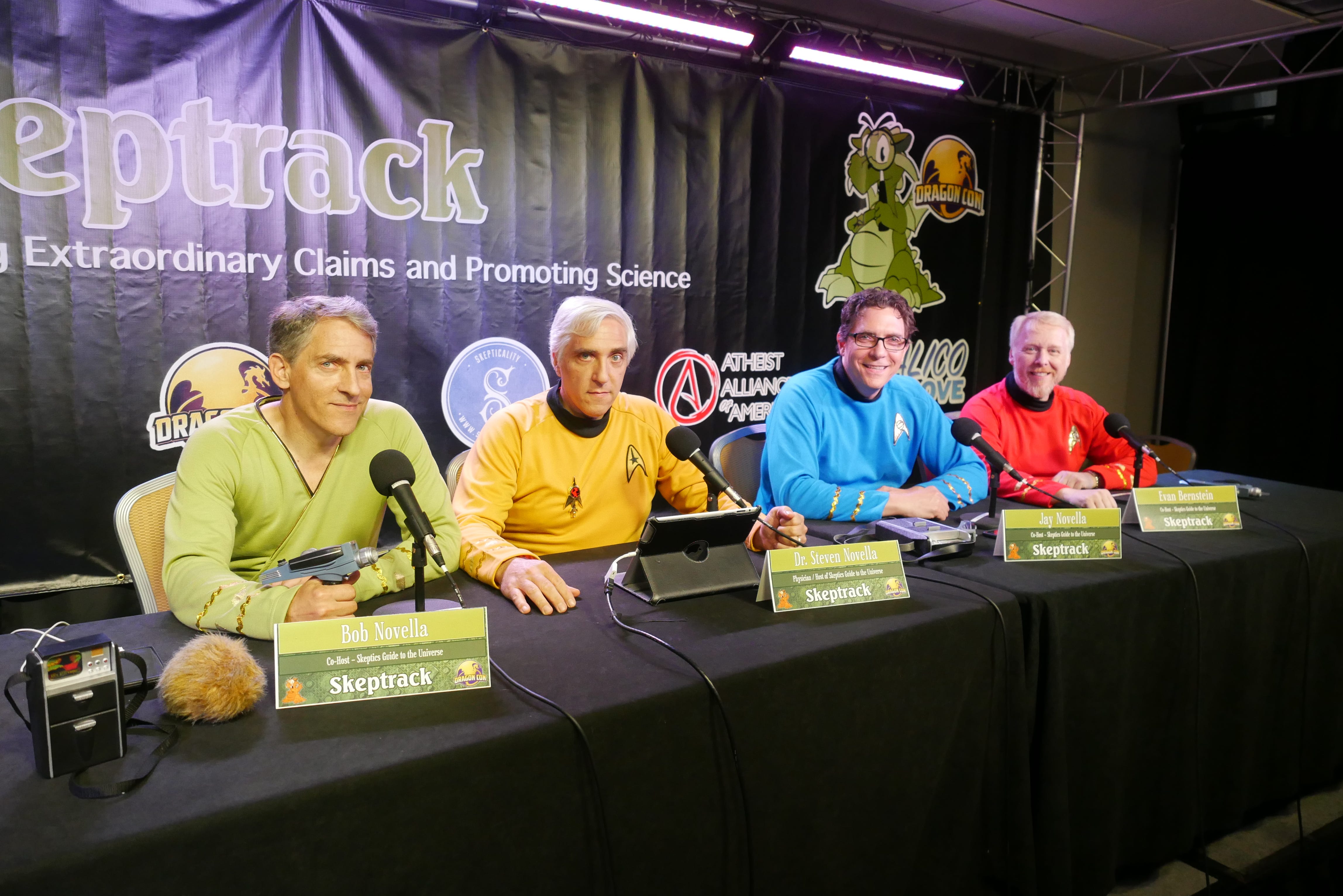
I do not know Bernstein personally. I am not interested in writing a forensic account of every post, reply, and interpretation. That work can be done elsewhere by people with more patience for screenshots.
What interests me is the pattern.
Because this is not the first time a public skeptic, rationalist, atheist, debunker, or self-appointed defender of reason has appeared to forget that skepticism is supposed to be an approach, not an identity. It is not a tribe. It is not a lifestyle. It is not a brand of cleverness. It is not a podcast genre, a conference lanyard, a Twitter bio, or a smug little pin badge worn while correcting strangers.
Skepticism is a practice, and like any practice, it decays when you stop doing it.
The trouble begins when “I use skeptical tools” quietly becomes “I am a skeptic.” That shift may sound small, but it matters. A tool can be put down, sharpened, misused, repaired, or improved. An identity is much more fragile. Identities need defending. They become part of the ego, attract tribes, heroes, enemies, slogans, merchandise, in-jokes, status games, and social rewards.
Once skepticism becomes an identity, criticism of your reasoning can feel like criticism of your selfhood. Being wrong stops being a normal part of inquiry and becomes humiliating. Apologising becomes defeat and listening becomes capitulation. The skeptic, of all people, becomes emotionally invested in not noticing their own motivated reasoning.
That is where the rot sets in.
Public skepticism has always had an outward-facing problem. So much of it developed around debunking other people: psychics, mediums, ghost hunters, creationists, UFO believers, conspiracy theorists, anti-vaxxers, dowsers, cryptozoologists, paranormal investigators, alternative medicine practitioners, and anyone else deemed insufficiently attached to reality.
I am not saying none of that work matters. Of course it matters. I have done versions of that work myself. I have spent years writing about ghosts, folklore, belief, evidence, fraud, perception, memory, and the strange places where personal experience meets cultural storytelling. I think skepticism is useful. I think critical thinking is useful. I think bad claims deserve scrutiny, especially when they exploit grief, fear, illness, or vulnerability.
But when skepticism only points outward, it becomes less like a method and more like a searchlight. It illuminates other people’s mistakes while leaving the person holding it in darkness.
That is the danger.
A person can become very good at spotting logical fallacies in someone else’s ghost story while remaining completely incurious about the assumptions beneath their own politics. They can mock a conspiracy theorist’s pattern-seeking while failing to recognise the pattern they have built around “people like me are rational and people like them are not.” They can explain cognitive bias on a stage, write books about misinformation, record podcasts about poor evidence, and still be led around by fear, prejudice, loyalty, ego, status, resentment, or disgust.
This should not surprise us. Skeptics are people. That is the whole point. We are not immune to the machinery we describe.
In fact, I sometimes think the public skeptic is at particular risk because the role comes with applause. There is a kind of social reward in being the person who sees through nonsense. It feels good to be the one with the sharper explanation, the cleaner argument, the devastating fact-check. It feels good to be part of the group that knows better.
And yes, sometimes we do know better. I am not pretending all claims are equally valid or that every argument deserves endless patience. Some things are simply untrue. Some people are dishonest. Some claims are harmful. Some beliefs need challenging.
But knowing better in one context does not make you better.
That distinction seems to be where famous skeptics often stumble. Expertise in one area becomes a general aura of authority. A reputation for rationality becomes a shield. An audience becomes a buffer against accountability. The longer someone is praised for being reasonable, the easier it becomes for them to mistake their first reaction for reason itself.
The irony is painful. Skepticism should make a person slower, not faster. It should create a pause between stimulus and conclusion. It should make us ask: what do I know? How do I know it? What am I assuming? What would change my mind? Am I reacting to evidence, or am I reacting to discomfort? Am I applying the same standard to myself that I would apply to someone I dislike?
Instead, too often, it becomes a performance of certainty.
This is how “just asking questions” becomes a laundering device for prejudice. It is how “free inquiry” becomes a refusal to consider consequences. It is how “debate” becomes a demand that marginalised people repeatedly justify their own humanity to someone who has mistaken detachment for objectivity. It is how “science and reason” become aesthetic choices rather than ethical commitments.
The skeptic movement has produced a lot of useful work. It has also produced a strange number of people who appear to believe that being clever is the same as being wise.
Cleverness can help you win an argument. Wisdom might tell you when the argument itself is cruel, lazy, or unnecessary. Cleverness can identify a weak claim. Wisdom can recognise that the person making it might be grieving, frightened, lonely, or trying to survive. Cleverness can dismantle someone else’s belief system. Wisdom asks what you are building in its place.
There is also a structural problem here that skepticism has never fully reckoned with. Movements that repeatedly elevate confident men who have not had to interrogate their own assumptions will keep running into this wall. Not because men are uniquely incapable of critical thought, and not because privilege is a moral stain that makes someone forever untrustworthy, but because unexamined privilege has a way of disguising itself as neutrality. If the world has often treated your perspective as the default, it becomes very easy to believe you are simply describing reality while everyone else is being emotional, political, tribal, or irrational.
That is a dangerous place for a skeptic to stand.
That is where I increasingly find myself out of step with parts of organised skepticism. Not because I have lost interest in evidence, but because evidence without humility curdles into arrogance. Debunking without compassion curdles into sport. Rationalism without self-awareness curdles into another kind of dogma.
This is also why hero worship in skeptic spaces is so dangerous.
The movement has always had its famous men. The great debunkers, the public intellectuals, the conference headliners, the quote machines, the authors, the podcast hosts, the magicians with a microphone and a challenge. Many of them did important work. Some of them changed public conversations for the better. Some of them helped people leave harmful beliefs behind. Some of them inspired entire generations to ask better questions.
And some of them also said or did things that deserved criticism.
Both can be true. That is supposed to be the easy part for skeptics, isn’t it? Holding more than one thought in our heads at the same time. Following the evidence even when it complicates the story. Refusing comforting myths.
Yet when the myth is our own, suddenly the standards become slippery.


We see this whenever criticism of a skeptic figure is met not with curiosity, but with defensive reflex. They did so much good, they were from a different time, they were joking, they were misrepresented, being provocative, just asking questions. They are not really like that…
You are taking this out of context.
You are damaging the movement. You are giving ammunition to the other side…
That last one is especially revealing. The movement. The side. The tribe.
This is what happens when skepticism becomes a belonging system. Protecting the reputation of the group becomes more important than applying the method. The skeptic’s first duty quietly shifts from “what is true?” to “how do we manage the embarrassment?”
But embarrassment is not the enemy of skepticism. Embarrassment is often where skepticism starts. It is the little internal alarm that says: hang on, I might have been wrong about this. I might have trusted the wrong person. I might have repeated a claim too confidently. I might have mistaken familiarity for credibility. I might have let loyalty do my thinking for me.
That is uncomfortable. Good. It should be.
Skepticism that never makes the skeptic uncomfortable is just suspicion aimed at other people.
I think about this often in relation to paranormal belief, because it is the area I know best. There are easy ways to be a skeptic in paranormal spaces. You can sneer. You can mock. You can wait for someone to mention orbs, EMF meters, EVPs, psychics, demons, or “energy” and then perform the familiar routine. You can become very good at explaining why everyone else is wrong.
The harder thing is to ask why these stories matter. Why people reach for them. What grief does to perception. What loneliness does to interpretation. How folklore travels. How memory edits itself. How a hoax can still tell us something true about the culture that receives it. How a witness can be sincere and mistaken. How a skeptic can be correct and still behave badly.
That is the skepticism I want to practice.
Not soft skepticism or credulity in a nicer jumper, but a skepticism that understands people as more than containers for bad claims, and recognises emotion not as the enemy of thought, but as part of the terrain thought has to travel through.
This is where some famous skeptics seem to lose their way. They become so accustomed to being the reasonable person in the room that they stop checking whether they are still being reasonable. They become fluent in the vocabulary of bias while treating their own biases as exceptions. They can identify tribalism in everyone except their own audience, and they can see how belief protects identity in religious or paranormal communities, but not how skepticism can do exactly the same thing.
The answer is not to abandon skepticism. That would be ridiculous. The world does not need less critical thinking. It needs better critical thinking that’s more honest, more self-directed which does not stop at the border of the self.
The answer is to stop treating “skeptic” as a personality type.
Critical thinking is not a personality trait. It is not something you either possess or lack which is bestowed upon you because you read the right books, listened to the right podcasts, attended the right conferences, or learned to say “extraordinary claims require extraordinary evidence” with the correct amount of eyebrow.
It is something you do.
You do it when you check a source before sharing a claim that flatters your worldview. You do it when you notice that your dislike of someone is making their argument sound worse than it is. You do it when you admit that someone outside your tribe has made a fair point. You do it when you apologise properly. You do it when you stop explaining and start listening. You do it when you ask whether your “rational” reaction is actually fear wearing a lab coat.
You do it when you let yourself be corrected, and you do it when you hold to account people in our movement who have prejudice opinions.
That, to me, is the missing piece. A public skeptic should not be someone who is never wrong. That is impossible. A public skeptic should be someone who has built visible, reliable ways of noticing when they are wrong and responding well. Not perfectly. Not theatrically. Just honestly.
There is a great deal of talk in skeptic spaces about intellectual honesty. There is far less modelling of emotional honesty. Yet the two are connected. If you cannot say “I felt defensive,” “I felt embarrassed,” “I felt threatened,” “I reacted badly,” or “I did not want that to be true,” then your intellectual honesty has a ceiling. It will only operate in situations where your ego is not at stake.
That is not enough.
If the current SGU situation prompts anything useful, I hope it is not simply another round of side-taking. I hope it prompts some uncomfortable reflection among people who identify strongly with skepticism, science communication, atheism, rationalism, or critical thinking communities.
What are we actually practising?
Are we becoming more careful, or merely more confident?
Are we better at recognising bad reasoning, or just faster at labelling it in others?
Are we using skepticism to reduce harm, or to feel superior?
Are we willing to scrutinise our heroes with the same seriousness we bring to strangers?
Are we brave enough to notice when the call is coming from inside the skeptical house?
Because that is where the work is.
Not in declaring ourselves the rational ones. Not in collecting disappointing men and then acting shocked when they disappoint us. Not in replacing one hero with another, or pretending that cleverness, education, or a long history of debunking protects anyone from prejudice, cruelty, or self-deception.
Skepticism is not a destination you arrive at. It is not a title you earn and keep forever. It is maintenance. It is hygiene. It is a practice of returning, again and again, to the possibility that you may have missed something.
Including something in yourself.
And if that sounds less glamorous than being a famous skeptic, good.
It should.