

Remember When Most Haunted Put Words in Ruth Ellis’s Mouth?
I do.

I woke up this morning to the news that Ruth Ellis has been granted a posthumous conditional pardon.
This is great news, but does not erase the fact that, on 13 July 1955, Ruth Ellis became the last woman to be hanged in Britain after she was convicted of murdering David Blakely. However, the pardon does formally recognise that her case was not simple, and that the circumstances around it were not properly understood at the time.
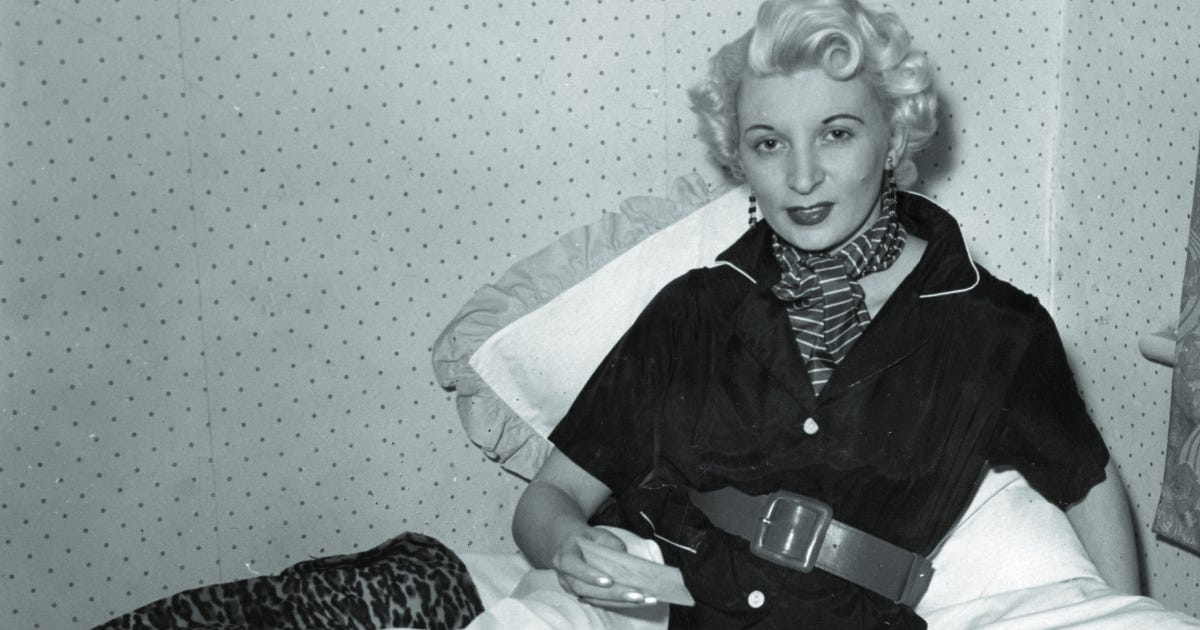
The Ministry of Justice has said the pardon reflects the exceptional circumstances of the case, including evidence of domestic abuse and coercive and controlling behaviour that Ellis endured. Under modern law and modern understanding, the outcome of her case may have been different. Ruth’s granddaughter, Laura Enston, said the pardon formally recognises that Ruth should not have been executed, and that the justice system failed her.
This is important because Ruth Ellis has often been treated less like a person and more like a symbol.
She has been made into this sort of character of the blonde nightclub hostess who was the “last woman hanged”. Ellis has been the murderess, and the woman at the centre of a scandalous mid-century crime story who shot her lover in the street. Her story has been turned into films, documentaries, newspaper columns, and public debate.
And, because British paranormal television has never met a dead woman it could not turn into content, she has also been made into a ghost story.
In 2003, Most Haunted visited Caesar’s Nightclub in Streatham. Ruth Ellis had worked at the club in the 1950s, before her trial and execution, and the episode leaned into the idea that her ghost might still be present there.
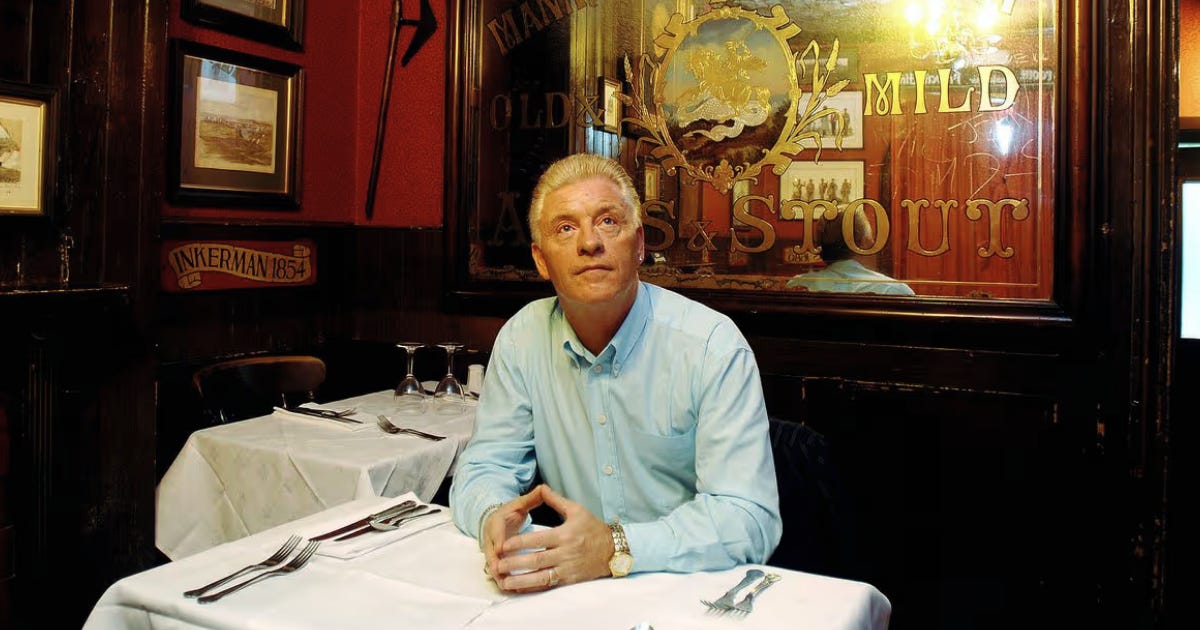
During the programme, Derek Acorah, then the show’s resident medium, claimed to make contact with the spirit of a young woman whom he went on to identify as Ruth Ellis.
In the episode, Acorah claimed that Ellis said “they got it wrong” and he claimed she showed him a gun, fired three times, and said that it was not four shots but three.
“I would know,” she supposedly said. “I did it.”
Acorah also claimed that Ruth Ellis and David Blakely had reconciled in the afterlife and were now together again.
That last claim is the reason I am writing this, because there is something deeply wrong with taking the story of a woman who was abused, traumatised, convicted, and executed, and claiming that she has returned from the dead to make the story more comfortable for television.
There’s something grotesque about suggesting that Ruth Ellis and David Blakely are “back together” in the afterlife, as though death has tidied up the violence and made the story neater and more romantic. As though the dead woman can now be made to say what makes the audience feel better.
This is not just a silly ghost claim. It’s a claim about a real dead woman who was an abuse victim, and whose life, death, and memory have already been handled badly enough.
Ruth Ellis did not need Derek Acorah to speak for her, but he went ahead and did it anyway - another form of control from a man. As though death isn’t enough to spare you.
That’s the problem with this kind of mediumship. It gives the medium enormous power by standing in front of a camera, or on a stage, and claiming that a dead person has said something.
In the case of Ruth Ellis, Acorah’s claim does something particularly unpleasant by giving the audience a sentimental ending when the real story is hard.
It’s about domestic abuse, coercive control, trauma, misogyny, and a woman executed. It is a story about a legal system that did not properly account for the conditions in which some women commit violence because of what they’ve had to endure. It is about children and grandchildren carrying the consequences of state violence across generations.
The ghost story version is easier.
In that version, Ruth is still around and can correct the record about the number of shots, and reassure everyone that she and her abuser have made up and are back together again. She can even compliment Derek Acorah’s suit.
And really, pause on that for just a second.
A dead abused woman, executed by the state, supposedly coming through from beyond the grave to compliment Derek Acorah’s outfit.
There are many ways to describe that and “spiritual insight” isn’t one of them.
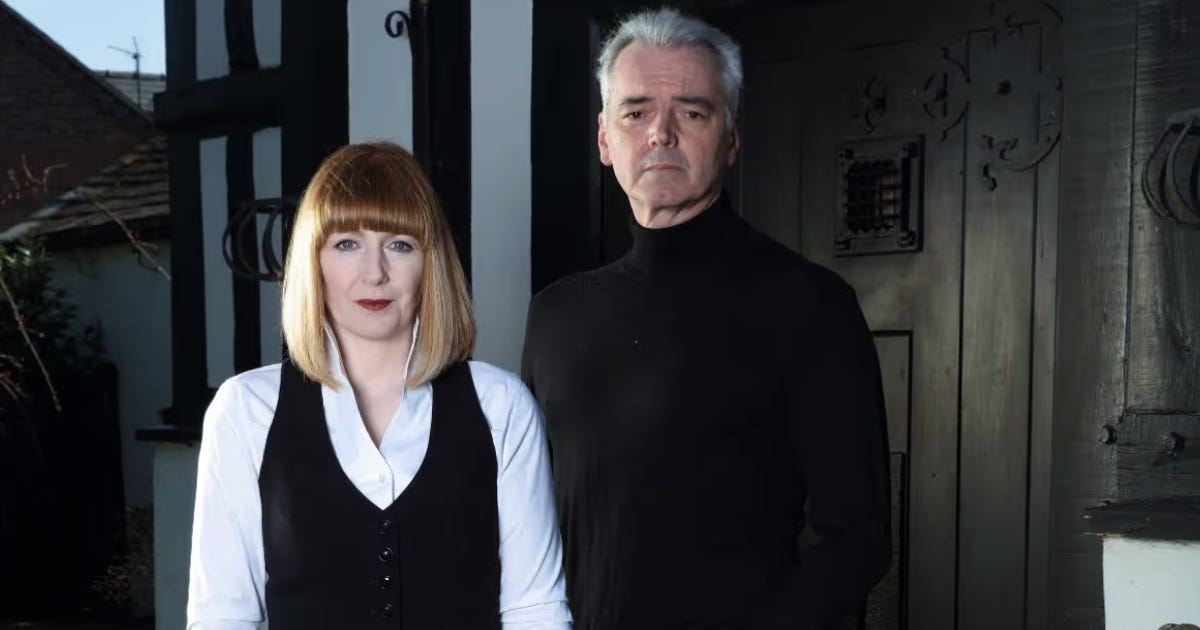
Derek Acorah turned the brutal history of Ruth Ellis into spooky entertainment, which is why the recent conditional pardon matters. However, he was not standing there by accident. He was hired to be part of the Most Haunted show - a production created by Yvette Fielding and Karl Beattie, who founded Antix Productions together and sold the show internationally.
Fielding presented the program while Beattie produced and directed it.
The show’s success rested on a carefully constructed blue between investigation and entertainment, and it’s a blur that really matters.
Ofcom considered complaints about Most Haunted and Most Haunted Live in 2005 after viewers raised concerns that some elements had been staged in advance. While Ofcom did not rule that paranormal activity was real or fake, they did conclude that Most Haunted should be understood as entertainment rather than as a legitimate form of investigation. They noted the showmanship, dramatic responses, studio elements, phone-ins, and the regularity (and convenience) with which paranormal events appeared to occur.
Ofcom also said the programme should be seen in the light of shows where techniques are used that mean the audience is not necessarily in full possession of the facts. It found the programmes were not in breach of the Code, but it also said they could not reasonably be described as a legitimate investigation.
That should be embarrassing. Instead, it became part of the strange protection that paranormal television often enjoys. When challenged, it’s entertainment. When prompted, it’s investigation wink wink.
When the medium speaks, the dead are apparently talking, but when questioned, it’s only a show. Convenient, right?
It allowed Most Haunted to use real places, histories, crimes, grief, injustices, and dead people, while being able to retreat into the language of entertainment when the ethics became uncomfortable.
And Ruth Ellis is not a fictional character, or even a spooky archetype created for a halloween special. She was a real women whose story involved abuse, violence and an execution that her family have spent decades challenging.
Derek Acorah turned her into content, and Most Haunted gave him the stage, camera, careful editing, and the audience. Take a bow, Antix productions.
Acorah was also not the only credibility problem the show faced.
In 2005, Most Haunted parapsychologist Ciarán O’Keeffe accused Acorah of fakery. O’Keeffe claimed he had fed Acorah false information about invented spirits, including one named Kreed Kafer - which is an anagram of “Derek Faker”. Acorah then allegedly channeled messages from this spirit as though they were real. The Guardian reported Yvette Fielding as saying: “We tell people everything is real, then it turns out he was a fake, so he had to go.”
That quote is astonishing, really.
“We tell people everything is real.”
That is the problem in one sentence, isn’t it?
When a show tells people everything is real, it cannot then act as though it has no responsibility for the claims made under its banner. It cannot use the authority of investigation and then hide behind the defense of entertainment. It is not acceptable to invite your audience to treat mediumship as meaningful and then shrug when that mediumship turns cruel and tasteless.
The conditional pardon pulls Ruth Ellis back out of the flattened version of the story spun by people Fielding, Beattie, Acorah and co, and tells us to look again. Look closer, slowly, and ask what was missed, and what we might have accepted as fact which was not fact at all. It makes us pause and ask what the law failed to understand and what it means that this woman was executed.
The Most Haunted version of the case does the opposite. It does not ask us to sit with the discomfort or to think seriously about abuse, punishment, gender, or justice. It turns her into content.
And the worse thing about it? It wasn’t an isolated problem with Derek Acorah.
In 2012, he was forced to apologise to the family of Madeleine McCann after claiming he had received a psychic message saying she was dead. Madeleine was, and remains, a missing child. Her family are still alive, grieving, and living with the horror of not knowing. Yet Acorah inserted himself into that story too.
This is the pattern we come to recognise with psychic mediums. The claims they make often give them starring role in somebody else’s pain that they are not entitled to.
I have witnessed this myself.
I once attended one of Acorah’s live shows and watched him misgender a dead baby to the baby’s mother’s face. He had guessed wrong in a 50/50 chance. But the setting did not allow for that moment to be treated with the seriousness it deserved. The show had to go on - the medium had to remain the medium, and the grieving had to absorb the mistake.
I remember the disgust of the people sitting around me. Acorah had gone too far, and the room knew it.

That is what makes this kind of performance so troubling becasue when a medium gets something wrong, it is not just a failed trick. It’s a wound. And when a medium makes a grand claim about a dead person, especially a dead person whose story involved violence or injustice, the consequences are not neutral.
The claim about Ruth Ellis and David Blakely being reconciled in the afterlife is not harmless. It repeats a familiar cultural move which smooths over male violence, and asks us to imagine that the woman has forgiven her abuser.
It gives closure to people who were not entitled to receive it.
That is not spiritual insight. It is narrative theft, and it’s disgusting.
It can be tempting to focus on the question of whether psychic mediums are genuine or not - as much as this question matters, more pressing one asks who benefits from the story a medium tells?
In the case of Ruth Ellis, the answer is not Ruth Ellis. It is not her family, the other women whose lives have been shaped by domestic abuse, or the public understanding of a troubling history.
The benefit was to the programme, the atmosphere, and to the dramatic arc of an episode of paranormal television.
The recent pardon asks us to look at Ruth Ellis with more care and to understand that what happened in 1955 cannot be separated from the abuse and trauma that shaped her life and the lives of her children and grandchildren. It asks us to recognise that the law failed to see her fully.
Most Haunted did not see her fully either. It saw a famous dead woman and a chance for a dramatic revelation. It saw a ghost story and the chance for a dramatic revelation.
This matters not because Most Haunted was uniquely terrible, or because one old episode of paranormal television is the most urgent injustice connected to Ruth Ellis. It obviously is not. However, it matters because it shows how easily the paranormal entertainment industry can exploit the dead while pretending to honour them.
“I am only passing on a message” is a powerful shield which lets the medium avoid responsibility for the content of the message. It lets the performer say something tasteless, cruel, or absurd, and then act as though the dead person said it first.
But Ruth Ellis did not say this - Derek Acorah did, and Most Haunted broadcast it. We need to be clear about that because it’s a distinction that matters.
Acorah is dead now, so this is not about demanding an apology from him or pretending that one man invented every bad habit in paranormal television. He did not - the problem is bigger than him, but he was very good at embodying the problem. He made claims with confidence and used grief as a stage. He treated the dead as available and was willing to step into other people’s tragedies and announce what only he could supposedly hear.
And Antix Productions helped make this performance famous.
That should be remembered alongside the entertainment value, the catchphrases, the night-vision chaos, and the nostalgia people still have for Most Haunted.
We can enjoy ghost stories and study paranormal culture. We can understand why programmes like Most Haunted became so popular, but we should not forget that “spooky” does not cancel out ethics.
When the subject is somebody like Ruth Ellis, that really fucking matters.
Ruth Ellis was a real person. She was a mother who was abused and controlled, and when she killed her abuser, she was convicted and sentenced to death. She was executed.
She was executed unjustly.
Her family carried the consequences. Her grandchildren did an incredible job of fighting for justice and seventy years later, the state has finally recognised that the case- and Ruth -deserved more mercy than was received.
The least paranormal television could have done was not put words in her mouth.
Derek Acorah did not speak for Ruth Ellis.
He spoke over her.
And Most Haunted let him.