


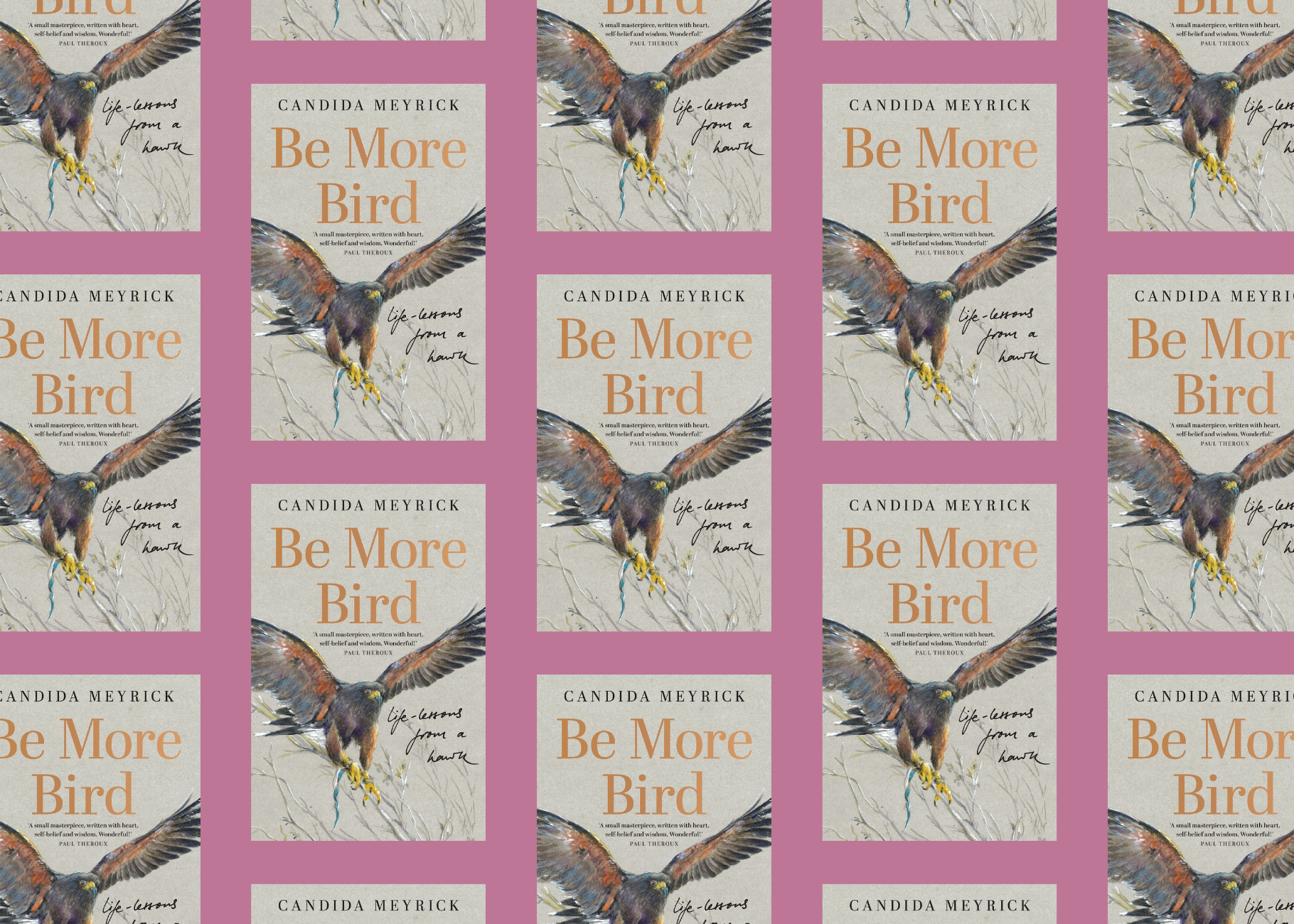
I picked up Be More Bird: Life Lessons from a Hawk by Candida Meyrick on a whim, which is often how the best books seem to find us. It was sitting there on one of those little promotional displays in the bookshop, and because I’ve always had a particular fondness for birds of prey, I added it to my pile as a last-minute impulse purchase.
I’m so glad I did.
I loved this book. Genuinely, deeply loved it. It’s beautiful - not in a polished, superficial sense, but in the way it quietly unfolds its thoughts about illness, identity, freedom, family, fear, and the strange ways our lives can be reshaped by paying attention to another living creature. Bird, Meyrick’s hawk, is at the heart of the story, but this isn’t simply a book about falconry or nature writing. It’s about what Bird came to mean to her, and what Meyrick discovered through loving, observing, hunting, and living alongside her.
The book traces Meyrick’s rethinking of her life after a cancer diagnosis, her experience of Bird joining her family during lockdown, and the lessons she came to take from that relationship. I thought the Guardian review was rather harsh, criticising it as a sort of self-help book that misses the mark, but that wasn’t my reading of it at all. To me, this isn’t really a self-help manual in the usual sense. It doesn’t feel like Meyrick is trying to hand down a neat set of universal life lessons for the rest of us to obediently apply.
Instead, it feels much more honest than that.
This is Meyrick’s story about the lessons she took from Bird. That’s what makes it work. It’s personal rather than prescriptive, reflective rather than preachy. The book is less “here is how to live” and more “this is what this extraordinary creature helped me to see about my own life.” That distinction matters, and I think it’s where some reviews have perhaps missed the point. Not every reflective book has to present itself as a blueprint. Sometimes it is enough, and more than enough, for a writer to say: this is what happened to me, and this is what I learned from it.
One quote right near the end of the book really stopped me in my tracks:
“We’re all wearing disguises, more or less, but some are chosen - beautiful costumes designed to manifest new intention. Others are just unwanted, hand-me-downs: someone else’s life you’ve been wearing for far too long.”
That hit me hard.
As someone who has only recently emerged back into the world after a career break of almost a year because of neurodivergent burnout, I felt that one in my chest. Sometimes a sentence arrives at exactly the right moment, and this one did. It captures something I think many people will recognise: the exhausting experience of living in shapes that don’t fit you, of carrying ways of being that were never really yours, of realising that survival and authenticity are not always the same thing.
That, for me, is where Be More Bird really shines. It isn’t trying to be a tidy, marketable handbook for personal transformation. It’s much more intimate and more human than that. It’s about recovery, attention, companionship, and the small but profound shifts that can happen when your life is interrupted and you’re forced to ask yourself whether the way you’ve been living is actually the way you want to go on.
This is a lovely, thoughtful, moving book, best read slow - I’m honestly delighted that I picked it up on impulse, and I’m going to make an effort to be more Bird.