


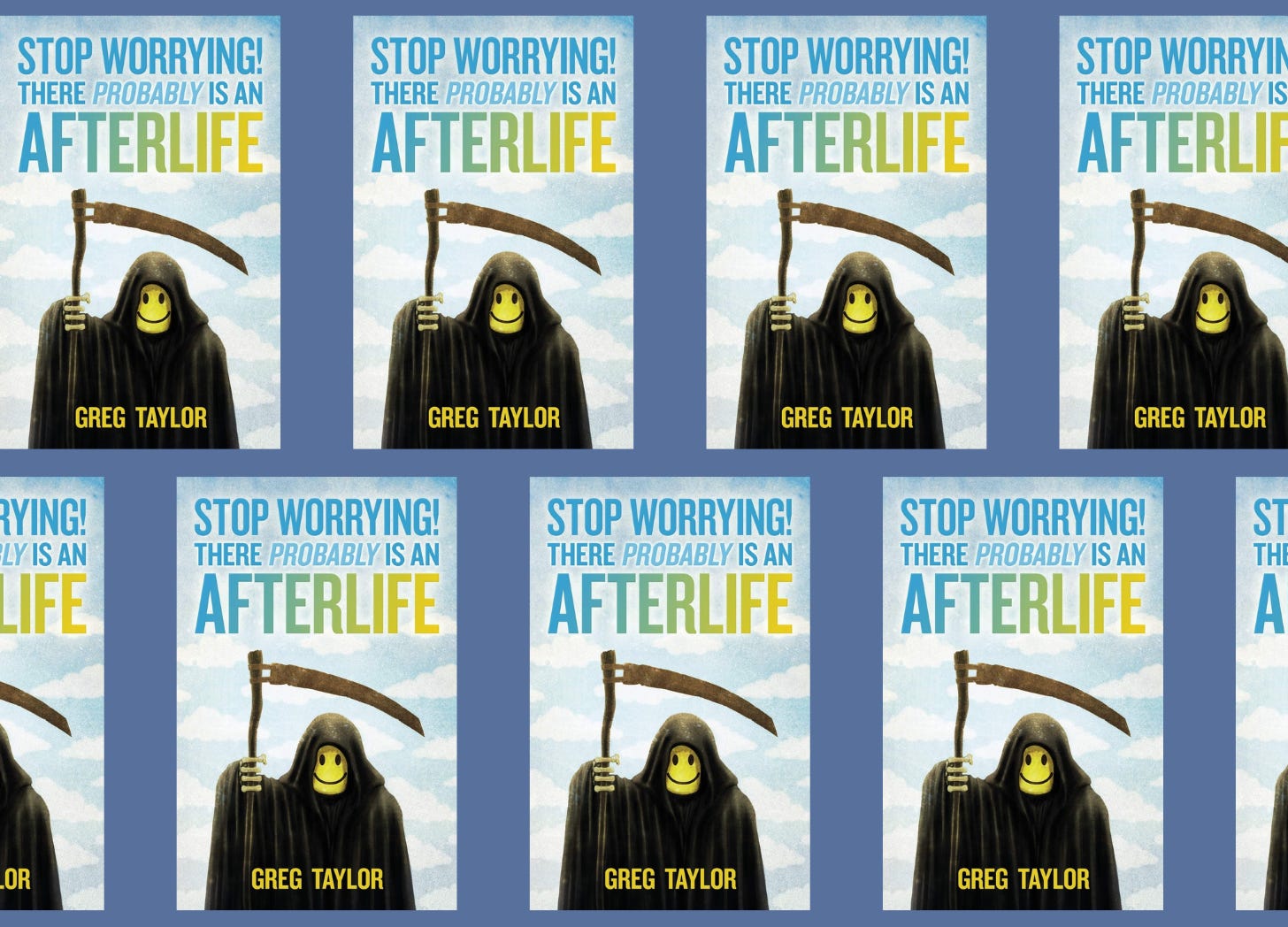
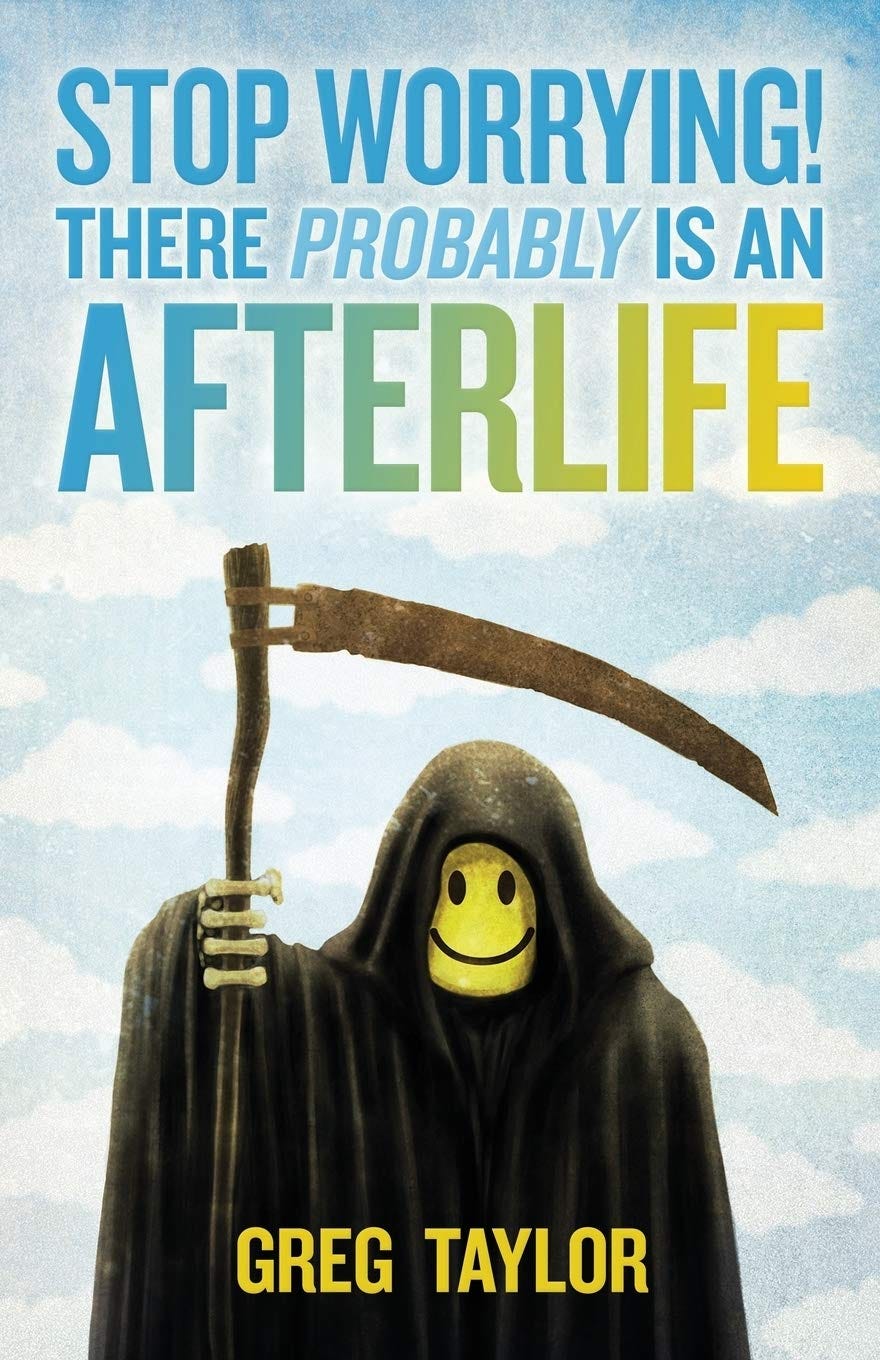
It’s been a long time since a book about ghosts gave me the same gut-level excitement I used to feel heading out on ghost investigations with my research team, but Stop Worrying! There Probably Is an Afterlife by Greg Taylor came very close. At its best, it reminded me of the buzz I got reading Mary Roach’s Six Feet Over or Will Storr’s Will Storr vs the Supernatural: that feeling of watching someone follow their genuine curiosity into strange territory.
Taylor’s book explores a range of research and claims related to life after death – from historical investigations to modern studies – and presents them in a very readable, narrative style. What really struck me is that it leans heavily on the kind of serious research that has underpinned paranormal discussion for decades, rather than the flashy pop-paranormal fluff you see on TV. His section on deathbed visitations, in particular, genuinely moved me. The stories he shares are powerful, and the joy and comfort they bring to the people who experience them is hard to ignore. In many ways, that’s what ghost stories often are: ways of making sense of love, loss and the hope of reunion.
That said, there are parts of the book that didn’t quite land for me. In some sections, especially around mediumship research, I felt we were being asked to accept conclusions that didn’t follow a fully logical route. Taylor discusses the work of Dr Julie Beischel, who openly says her experiments aren’t designed to satisfy sceptics so much as to create the ‘right conditions’ for communication. She describes blinding mediums to sitters while still assuming that a sitter’s deceased loved one (“discarnate”) can and will communicate, and puts emphasis on particularly striking “hits” in readings – those so-called “dazzle shots” – as meaningful evidence.
For me, this is where alarm bells start to ring. Focusing on the impressive hits while giving less weight to the misses is a form of cherry-picking that I recognise all too well from my own believer days. It’s exactly how I used to treat my ghost-hunting experiences: highlight the weird bits, quietly forget the boring failures, and then treat that edited version as proof.
The same goes for deathbed visitations. They are fascinating, profound experiences and absolutely worth studying, but I think it’s a leap to treat them as straightforward evidence of survival after death. There are so many psychological, neurological and cultural factors that could play a role that I don’t think we’re in any position to rule those out and jump straight to “therefore: afterlife”.
Where the book really does succeed, though, is in treating this material as part of a larger historical and cultural story. You don’t have to believe in an afterlife to find these cases and traditions interesting, and on that level I think Taylor does a good job. I’m not keen on sceptics who dismiss the book outright without reading it simply because of the author’s beliefs; I don’t share his conclusions, but I do think the material is worth engaging with.
Overall, I’d recommend Stop Worrying! There Probably Is an Afterlife to anyone who’s genuinely interested in paranormal research and ghosts, with one important caveat: read it with your critical faculties switched firmly on. Take the time to look up the studies mentioned, examine the methods, and reach your own conclusions. For me, one of the strongest signs that this is a worthwhile book is that it’s added several more titles to my “to read” pile – and anything that sends you off exploring further is doing something right.
Enjoy this? You can get more articles via my newsletter, The Ghost Geek, or support my work with a one-off tip on Buy Me a Coffee. Purchases made via links in this review may earn me a small commission through Amazon Affiliates at no extra cost to you.