

The Ghost Geek’s Friday Files #3
So much ghost nerdery from the first half of 2026 it should be illegal or something

The Friday Files are a semi-regular round-up of the strange and interesting things that have crossed the screen of the ghost geek lately. Think part scrapbook, part dispatch from the ghost-nerd trenches.
It has been a little while since I last opened the Friday Files, but the ghosts have not spent that time quietly waiting in the corridor. Researchers have been vibrating rooms with sound nobody can hear, psychologists have been asking what turns a strange sensation into a ghost, and Cambridge University Library has been quietly looking after samples of alleged ectoplasm.
So, you know. Business as usual.
This edition leans especially nerdy, with several new studies and a long read about the place of parapsychology in academia. As ever, inclusion here is not necessarily endorsement. These are things I found interesting, thought-provoking, or simply too perfectly ghost-shaped to leave sitting in an open browser tab.
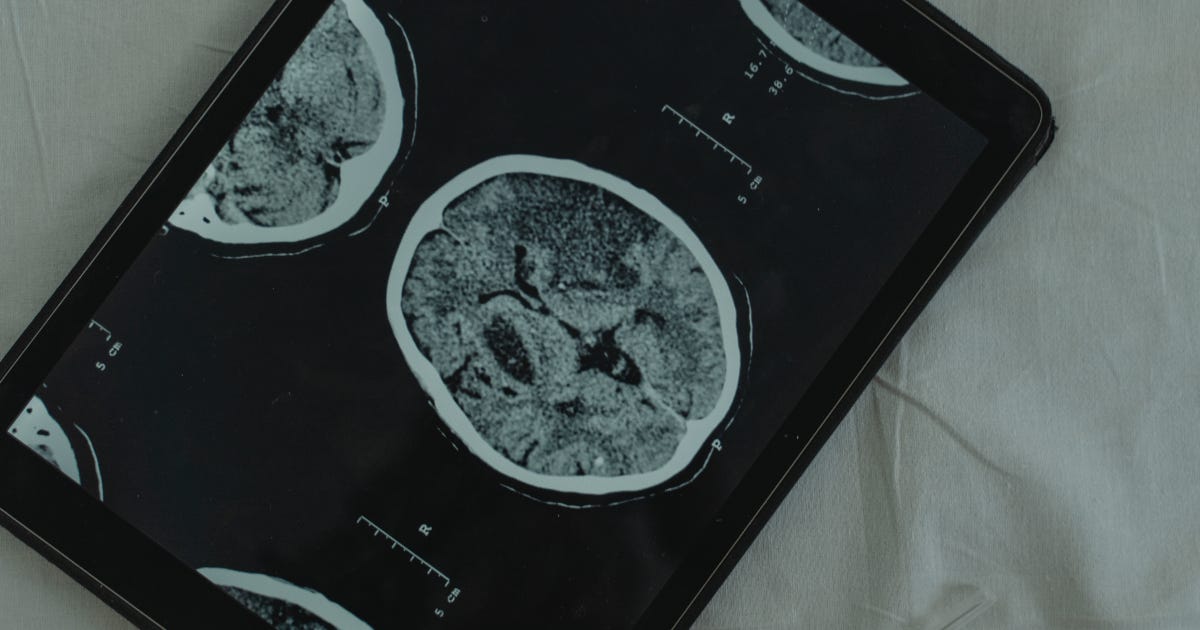
The sound you cannot hear but might still feel
Infrasound has been hanging around paranormal investigation for a long time. These are sound waves below the usual lower limit of human hearing, which can be produced by everything from industrial machinery and traffic to ventilation systems, elevators, and old pipes. Because allegedly haunted buildings are often old buildings, you can probably see where this is going.
The suggestion is that although we cannot consciously hear infrasound, our bodies may still respond to it and this could contribute to the unease, agitation, or sense that something is “off” which people sometimes report in haunted locations.
Over time, infrasound has been reached for as a scientific sounding explanation for why people experience ghosts, even though the evidential foundation for this is insubstantial and does not necessarily support such claims.
A new study published in Frontiers in Behavioral Neuroscience offers some intriguing evidence for this idea. Researchers recruited 36 participants and asked them to sit alone listening to either calming or unsettling music. Half were also exposed to hidden infrasound at around 18 Hz. Saliva samples were taken before and after to measure cortisol, and participants were asked about their mood and whether they thought infrasound had been present.
Results show that the participants could not detect the infrasound more accurately than chance. Even so, those exposed to it showed higher salivary cortisol and reported more irritation and less interest. They also judged the music to be sadder. What participants believed about whether the infrasound was playing did not appear to account for those effects.
That is fascinating, but it is important not to sprint several miles ahead of the evidence. This was a small laboratory study which did not take place in haunted buildings, measure ghostly experiences, or demonstrate that infrasound “causes” hauntings. It suggests that an imperceptible feature of an environment can create measurable physical and emotional effects for some.
The ghostly part may come afterwards, when an eye-witness tries to explain or make sense of why a perfectly ordinary basement has suddenly made every nerve in our body vote to leave. Or why a certain skeptic fled a room in a historic house because it felt wrong.

👉 There is an accessible summary of the research from Frontiers.
Canada’s paranormal fence-sitters
Canada has become increasingly secular, but apparently nobody told its ghosts.
A research note published in the Canadian Review of Sociology reports the first nationally representative examination of paranormal belief in Canada for more than two decades. That nationally representative part matters because surveys about paranormal belief are often conducted through opt-in polls, newspaper readerships, or other convenience samples which tell us plenty about the people who answered, but much less about the wider population.
Researchers Tony Silva and Emily Huddart found that 44.8% of Canadians believed in at least one of the paranormal phenomena included in the survey. A further 31.3% did not positively endorse any of them but selected a neutral response for at least one.
In other words, the paranormal landscape is not neatly divided between committed believers and hard-liner skeptics. There is an enormous group standing somewhere in the middle saying, “Well, I just don’t know.”
Honestly, I think the fence-sitters are among the most interesting people in belief research. A neutral answer can hide all sorts of positions: genuine uncertainty, openness without conviction, a feeling that science might explain something one day, or simply reluctance to make a definite claim. Treating all those people as secret believers or non-believers would flatten a genuinely complicated picture.
Here are my key takeaways from the study:
Ghostly hauntings were the most widely endorsed phenomenon,
Women were more likely than men to believe in ghosts and psychic abilities,
People with a university degree were less likely to endorse paranormal claims.
19–29-year-olds were less likely to believe in several phenomena than people aged 30–64,
this runs contrary to the worry that the young adults are gullible because of social media content. (Kids these days etc. etc.)
The findings cannot tell us why each person believes what they do, and demographic patterns never explain an individual. What the study does offer is a much better snapshot than the usual Halloween headline poll.
👉 The full paper is available to read online, complete with useful charts for anyone who also enjoys their ghosts in graph form.
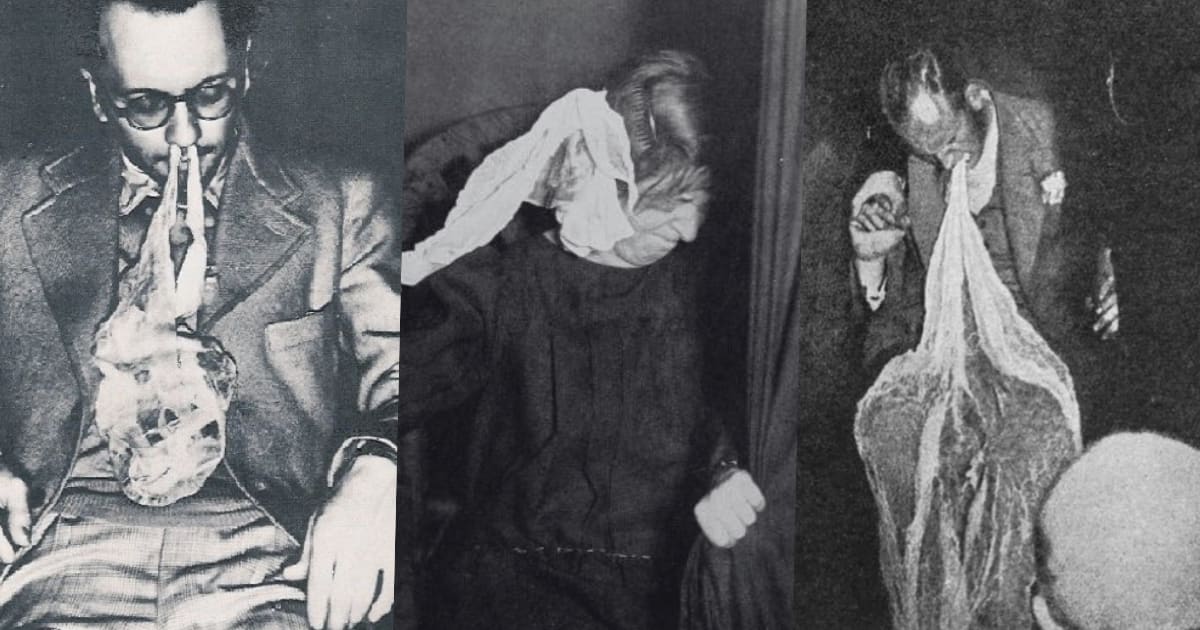
The ectoplasm in a Cambridge archive
Cambridge University Library contains priceless medieval manuscripts, historic philosophical texts, and some samples of alleged ectoplasm.
I appreciate an archive with range. Even if it’s yucky.
In a new long read for New Lines Magazine, Lydia Wilson explores the university’s collection of material from the Society for Psychical Research (SPR) and asks whether parapsychology might be moving back towards academic respectability.
The SPR was founded in 1882 to investigate experiences and abilities described as psychical or paranormal. Its members and associates have included scientists, philosophers, classicists, politicians, and several people whose names will be familiar to ghost nerds (Mary Rose Barrington, Maurice Grosse, Tony Cornell, to name just a few). The surviving archive is valuable regardless of what anybody concludes about telepathy, mediumship, or survival after death. It documents attempts to apply organised investigation to extraordinary claims, as well as the enormous cultural reach of spiritualism and psychical research.
Wilson writes about séance records, alleged ectoplasm, and boards bearing messages supposedly produced through spirit communication. She also looks at the Perrott-Warrick Studentship, which funds psychical research, and the more recently established Ingo Swann Research Fellowship.
There is plenty here to delight anyone who enjoys the point where ghosts, archives, and institutional history collide. It also raises a question which deserves careful handling: what does it mean for parapsychology to be taken seriously by a university?
I’ve seen some negative reactions to this from the more skeptically inclined, but housing an archive means recognising that the material has historical and research value. Funding scholarly study means deciding that the questions, methods, or cultural history merit examination. Neither is the same as a university announcing that psychic abilities have been proven. Academic legitimacy can describe the legitimacy of studying a subject, not necessarily the truth of every claim made within it.
That distinction becomes slightly hazy in places in Wilson’s article, but perhaps that is part of what makes it worth reading. The history of psychical research has always lived in the uncomfortable space between open-minded enquiry and the risk of mistaking attention for validation.
Also: ectoplasm. In Cambridge. I was never going to leave this one out.
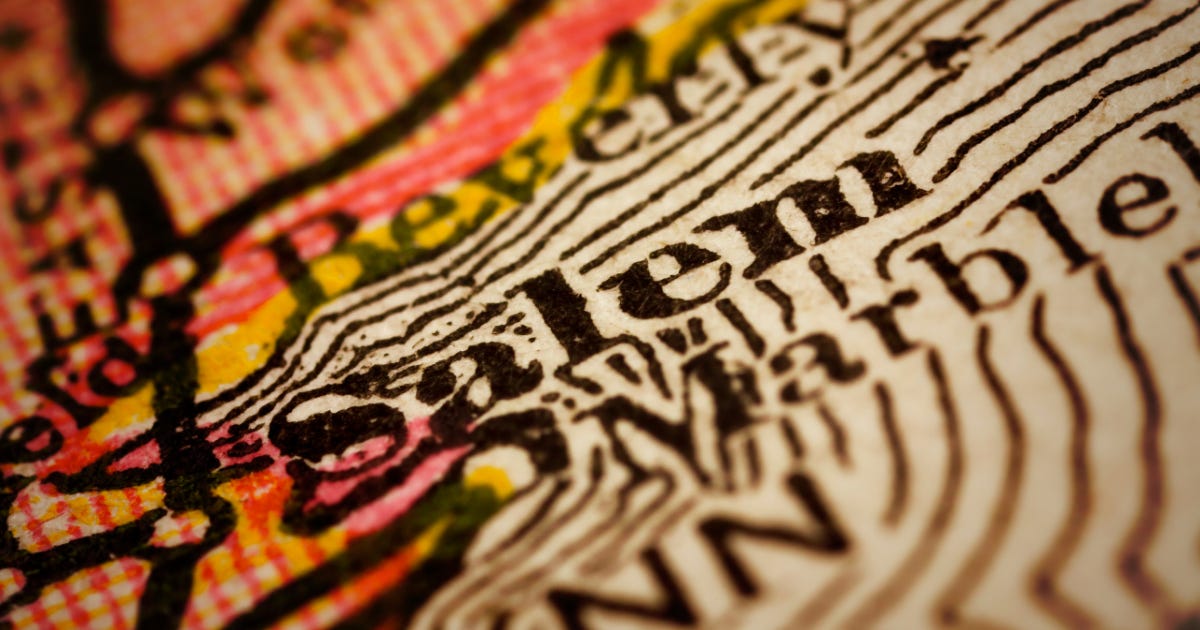
Psychology is getting spooky in Salem
If you happen to research the psychology of ghosts, witchcraft, superstition or the macabre, there is currently a conference call with your name written on it in slightly ominous handwriting.
The New England Psychological Association is inviting submissions for special themed sessions on the Psychology of Horror, Witchcraft and the Paranormal at its 2026 annual conference. The conference will be held in Salem, Massachusetts, because occasionally the universe understands the assignment. 🐈⬛
The suggested subjects are impressively broad. They include cognitive and perceptual factors involved in paranormal beliefs and experiences; the social psychology of witch trials, moral panics and mass hysteria; folklore and collective memory; superstition; monsters; occult belief; and the psychology of fear and horror. The organisers are inviting empirical research, theoretical work, posters and interdisciplinary approaches.
This may be a relatively small notice rather than a major new study, but I find it encouraging. Paranormal belief and experience can provide psychologists with a way to examine perception, memory, reasoning, social influence, identity and culture. Those are not fringe aspects of human behaviour just because the experiences being interpreted sometimes involve a ghost.
There is a tendency to assume that psychologists study paranormal belief in order to compile a list of things wrong with believers. Good anomalistic psychology is much more interesting than that. It asks how human beings make sense of ambiguous events, why some explanations feel intuitively right, how expectations influence perception, and how unusual experiences fit into otherwise ordinary lives.
It can also turn the lens onto skepticism. Confidence, motivated reasoning and selective attention are not qualities bestowed exclusively upon people we disagree with. Any psychology of belief worth having should be capable of examining everybody in the room.
Submissions for symposia, papers, and presentations are open until 1 August, with posters accepted until 1 September. I look forward to the possibility of research on ghosts being delivered in Salem with a completely straight academic face - as it should be.
When paranormal research gets weird-weird
The paper “Trickster-Like Experiences While Documenting the Paranormal” began with a citation that apparently appeared in an academic paper without any of its authors knowing where it came from. The reference could not be traced and did not support the claim attached to it. Rather than treating this solely as an ordinary citation error, the incident inspired a wider study of strange disruptions reported by people writing about paranormal subjects.
Researchers surveyed 167 people, including paranormal investigators and credentialed researchers. They asked whether participants had experienced things like themed dreams, meaningful coincidences, missing material, distorted recordings, device malfunctions or strong emotional reactions while working on ghosts, hauntings and poltergeists.
Sixty-one per cent reported at least one of the listed experiences. The most common included themed dreams, coincidences involving noises or spontaneously playing media, and a strong attraction or aversion to the material.
Now, there are obvious psychological reasons why this probably happens. Spending hours immersed in a subject makes related dreams and coincidences more noticeable. Technology fails, files disappear, and memory confidently fills gaps. An unexplained error feels far more significant when it occurs in a paper about supposedly mischievous paranormal phenomena than in this month’s budget spreadsheet.
To their credit, the authors state that there is no independent evidence that the mysterious citation was anything more than an untraced human mistake. They discuss source-monitoring errors, priming, expectation, and selective attention alongside more parapsychological possibilities.
However, there is also a conspicuously modern possibility which the paper does not appear to eliminate: that an AI-assisted writing or research tool generated a plausible-looking but nonexistent reference, which was then incorporated without adequate checking. We shouldn’t just assume that happened, but invented citations are a well-documented feature of generative AI. Before treating the reference as a particularly trickster-like mystery, I’d want a look at the paper’s drafting history and whether any AI tools were used by any of its authors.
The paper is a fascinating example of paranormal research turning its attention upon itself. It captures how easily the subject of an investigation can become the lens through which investigators interpret everything happening around them.
I’ve experienced this a lot myself but, as someone who champions using scientific skepticism as an investigative tool and methodology, I always take a moment to acknowledge why I’m getting spooked while doing spooky stuff.
Sometimes the ghost gets into the machine. Sometimes Microsoft Word is just haunted by Microsoft Word (or Copilot 😉).
That’s all from today’s Friday Files. As ever, if something strange crosses your screen, who you gonna call? Well, not me, you’re not getting my number, but feel free to send an email to hayley[at]theghostgeek.com, send a message on BlueSky, or click the button 👇