


Paranormal storytelling has a habit of borrowing the aesthetics of science while keeping the narrative instincts of a ghost story. Especially on popular YouTube channels or Podcasts. You can hear it in the pacing: an experience is described as unusually chilling, the narrator notes that the audience are obsessed with it, and an expert concedes it’s difficult to explain… and then, crucially, offers a possible explanation that lands like closure.
In a recent episode of the BBCs Uncanny, that closure arrives in the form of popcorn.
In the episode in question, the setup is elegant radio. Danny Robins frames the case as the rare one that stumped Dr Ciarán O’Keeffe. O’Keeffe pushes back - he’s not stumped, he has a possible explanation - and then comes the pivot: the clue lies in what the witnesses were doing before they saw a ghost. They were at the cinema and at a cinema you might eat popcorn. Popcorn, O’Keeffe points out, that is stored in humid environments can develop mould, and mould can produce mycotoxins. Mycotoxins can affect you neurologically and therefore popcorn becomes the suspect for what is framed as a potential hallucination experienced by two people at the same time.
It’s neat. It’s also a masterclass in how a single speculative mechanism can get promoted into a story-solving diagnosis without the audience ever being given the evidential bridge they’d need to cross. And boy, is that a bridge that needs to be crossed here. There are two separate topics that keep getting braided together:
damp and mould as a real public-health problem,
so-called toxic mould as a catch-all explanation for anomalous experiences.
They are not the same thing - and if you care about scepticism, or witnesses, or basic intellectual hygiene, you don’t treat them as interchangeable.
Damp and mould are real problems that matter
Let’s start with the boring bit that is actually important: damp and mould are a genuine health issue. UK guidance aimed at housing providers is explicit about the health risks and the need for prompt action. At a broader level, the Institute of Medicine’s landmark report on damp indoor spaces reviewed the evidence linking dampness and mould with adverse health outcomes, particularly respiratory symptoms and asthma-related effects.
So yes - if you have visible mould, persistent damp, a musty smell, or condensation you’re constantly chasing, that’s a problem worth fixing. These are issues that can make people feel physically unwell, disturb sleep, cause stress, and create a background hum of discomfort that changes how a place feels to live in.
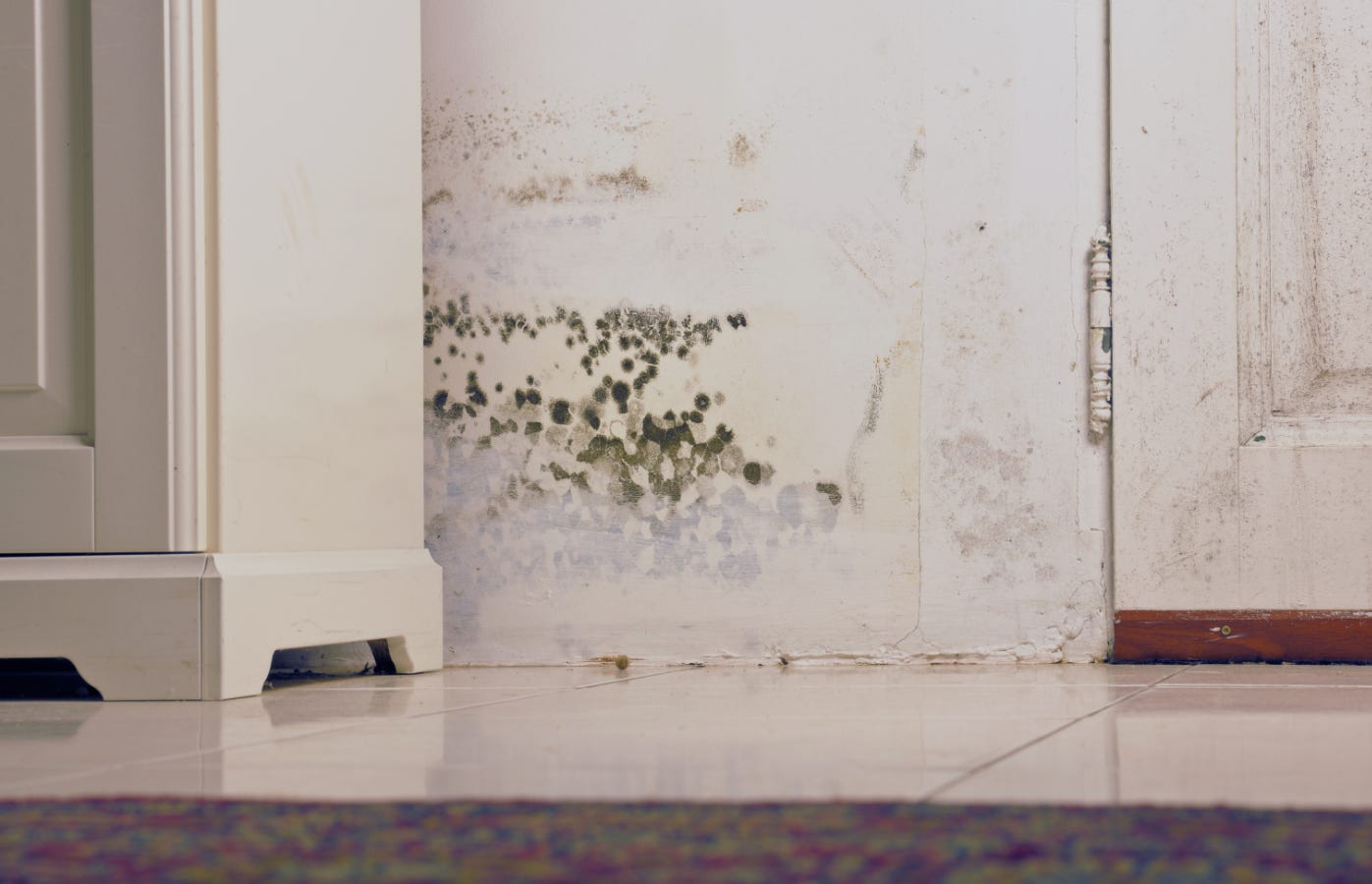
However, none of that requires us to turn the witness into a malfunctioning body. It’s enough to just recognise that environments shape experience. Where things begin to wobble is when that grounded point becomes a kind of narrative crowbar. When the facts that mould exists and can be harmful turns into “therefore mould explains your ghost story.”
The “toxic mould” gravity well
Here’s the thing - the idea that mould could cause ghost experiences feels right, and this is because of the popularity of claims and beliefs around Toxic Mould Syndrome (TMS). TMS is where a lot of media explanations pick up their momentum because it sounds like a credible diagnosis, it feels technical, and offers a single culprit for a wide range of medical symptoms. And hey, we’re all a little wary of mould, right?
But mainstream allergy and toxicology guidance repeatedly cautions against exactly this kind of overreach. The American College of Medical Toxicology’s position statement on mould-related inhalation exposures is unusually plainspoken: it states there is no documented evidence that inhalation exposure to fungi or indoor mycotoxins causes a chronic toxic encephalopathy. It also notes that mould VOCs can cause transient irritant symptoms and subjective complaints such as headache and dizziness, but it must be noted that these are not in the same ballpark as experiencing hallucinations.
Meanwhile, the American Academy of Allergy, Asthma, & Immunology (AAAAI) has public-facing guidance on TMS that works hard to separate what is known (allergy, asthma triggers, irritant effects) from what is commonly asserted without robust evidence. If you want a deeper clinical anchor, the AAAAI position paper The medical effects of mold exposure sets out the mechanisms by which mould is known to affect health (allergy, hypersensitivity conditions, infection in vulnerable people) and is frank about how many broader claimed effects remain unproven.
And that’s the context missing when mould is used as a debunking trump card. People can suffer real symptoms in mouldy environments - and they deserve proper support and remediation - but the leap from “mould is present” to “mould caused a specific neuropsychiatric event” is not one you get to take on vibes alone.
Popcorn as the “clue” is a mechanism without a case
So… could popcorn develop mould if it were stored badly? In principle, yes. Could corn products be contaminated with mycotoxins under poor conditions? Also yes.
But Uncanny isn’t presenting a food safety lecture. It’s proposing popcorn as a suspect in a specific, dramatic account - a shared roadside vision described as a possible apparition of a young man writhing around on a car bonnet. That moves us from general possibility into case-based inference, and that requires evidence.
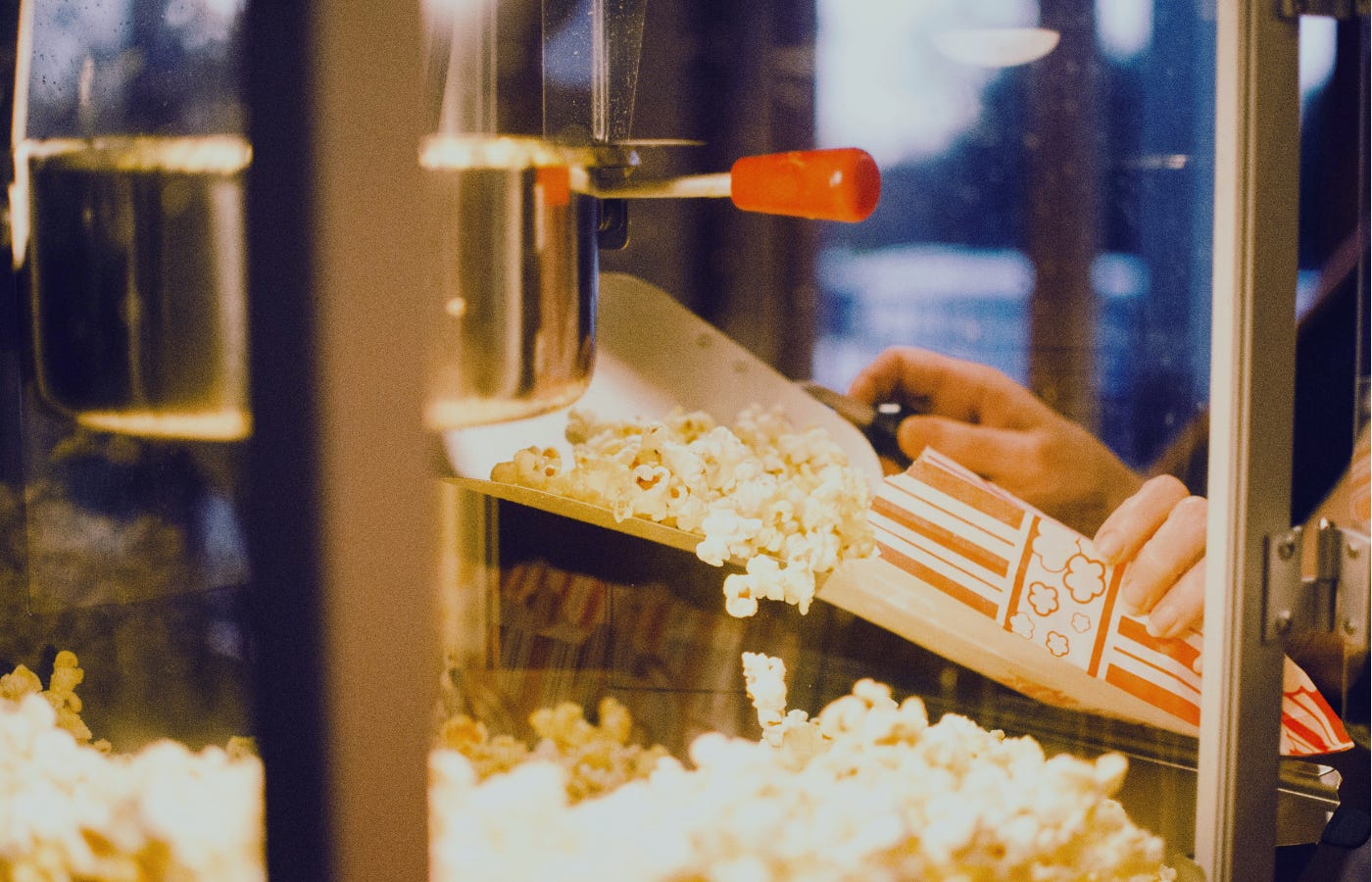
To make popcorn or mould a credible explanation for this story, you would need at minimum, evidence that popcorn was even consumed and, if it was, that it was contaminated (not merely that contamination is theoretically possible). You’d need to establish a plausible exposure route and dose relevant to acute neurological effects in two people at the same time, as well as a basic attempt at differential thinking, because there are many common factors that can produce frightening misperceptions on roads at night without invoking intoxication.
Instead, the listener gets a chain of coulds delivered in the language of detective work. It’s not that O’Keeffe literally says “this is definitely what happened.” It’s that the framing encourages the audience to treat it as a satisfyingly mundane solve - a rational ending to a scary story - rather than as a speculative suggestion with no case-specific support. And this matters because medicalised explanations carry a particular weight. They don’t just challenge a paranormal interpretation; they implicitly offer a diagnosis of the witness’s perception. And that can be reductive in a different way - especially when the show hasn’t done the work to justify it.
The mould-ghost story that keeps spreading
The mouldy popcorn idea doesn’t float in a vacuum. It plugs into a broader, already-familiar meme: that mould and mycotoxins can explain hauntings.
The most cited scientific version of this is the work associated with Dr Shane Rogers at Clarkson University. In 2015, a widely syndicated announcement described a team studying possible links between reported hauntings and indoor air quality, framing the question in terms of similarities between some haunting reports and symptoms some people attribute to toxic mould exposure.
More recently, a 2023 Atlas Obscura piece restated the project and included the quote that now travels everywhere: that Rogers found “five to six times more mould spores” in places reported haunted, while explicitly noting that the study has not undergone peer review.
There are two details in that write-up worth lingering on.
First, Rogers describes using ghost-hunting TV shows to identify haunted locations to use in the study. If the concept of a haunted location is operationalised as a place selected by television producers for atmosphere and reputation, you are not sampling hauntings; you are sampling a media-curated subset of old, dramatic buildings. Precisely the sort of environments more likely to have ventilation issues, damp, footfall, dust, and all the rest.
Second, the same article describes the work as analysing particulate sizes, noting the method does not specifically identify mould spores. That may be entirely fine as an early-stage screening approach - but without a published methods section (because the 2015 research was never published, by the way), we can’t assess what was measured, how confounds were controlled, or what “significant difference” actually means statistically between so-called haunted locations and non-haunted locations.
And that is the core issue: a decade on, the claim is still largely circulating through interviews and articles rather than a publicly accessible report that would let anyone evaluate it properly. It’s possible the preliminary pattern Rogers describes is real in those specific sites. It’s also possible it’s a predictable artefact of site selection and building age. Without transparent methods and data, those two possibilities can’t be separated - yet the claim is being used in paranormal discourse as if it has already done that explanatory work and these are established facts.
What the environmental research actually suggests
If you want to take a grown-up view of environmental explanations for haunted house experiences, it’s worth looking at the literature review terrain rather than one endlessly re-quoted unpublished project.
Dagnall and colleagues’ 2020 appraisal of the past two decades of environmental research on haunted-house experiences describes a field that is patchy and methodologically messy, with inconsistent findings across variables like air quality, temperature, lighting, and electromagnetic fields. Notably, O’Keeffe is a co-author on this review. This research doesn’t mean environment is irrelevant but means means it is rarely simple, rarely single-cause, and rarely a magic bullet that turns a vivid experience into a one-word explanation.
This is why the popcorn explanation lands as such an oddly confident suspect. It doesn’t sound like careful scepticism. It sounds like a story being given its ending.
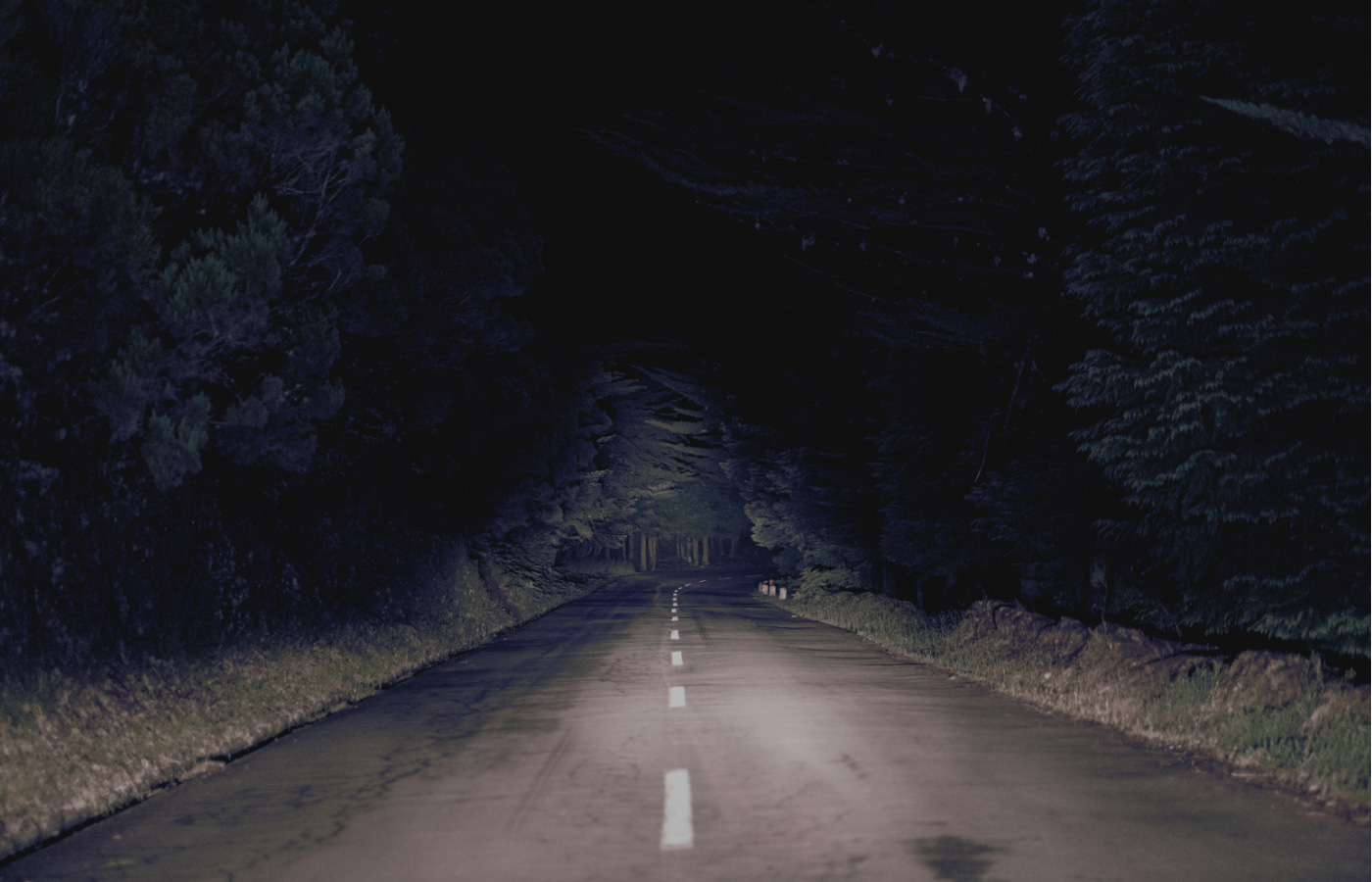
When people report frightening, uncanny experiences - particularly in conditions that involve darkness, speed, stress, unusual angles of light, fatigue, or expectation - perception itself is a rich, mundane explanatory landscape. The human brain is a pattern-detection engine that makes rapid judgments under uncertainty. Under threat, it over-interprets. Under low information, it fills gaps. Under heightened emotion, it tags experiences as significant and memorable. That’s not pathology; that’s how we function.
There is also an ethical point here: scepticism doesn’t have to default to medicalising people. Hallucination is a loaded word. Neurological effects is a loaded phrase. If you are going to imply that someone’s mind was chemically altered into seeing a writhing figure on their car bonnet, you need more than a neat clue. You need evidence - and you need to communicate the uncertainty honestly. I also wonder if the people whose story is being discussed were spoken to about the hallucination suggestion before it was broadcast to the public because this could be a troubling suggestion for some.
What would responsible citing look like?
If a podcast wants to float popcorn mycotoxins as a possible explanation for something experienced by two people at the same time, the minimum standard is not dramatic confidence but transparency.
I do not find hallucination to be a satisfactory explanation for what is reported by these two eye-witnesses. I do not know what caused their experience and I wouldn’t like to speculate because it would not be appropriate to do so. That, I believe, is the ethical and responsible position for investigators to take in these cases.
Where is the evidence that contamination occurred in this case? What dose and route are being implied? Which clinical or toxicological sources support the jump from mould exposure to vivid, content-specific hallucinations in an otherwise ordinary context? And if the broader mould-haunting claim is invoked, where is the publicly available study that can be scrutinised, rather than repeatedly hinted at?
Until those questions can be answered, mouldy popcorn is not an explanation. It is a storytelling device: a satisfyingly mundane suspect offered in the tone of science, with none of science’s accountability.
And that is, in its own way, as uncanny as anything on the road.
The Ghost Geek is an award-winning science blog about spooky things, written by Hayley Stevens, a former ghost hunter who is now studying for a Master’s in Forensic Psychology and uses scientific scepticism to investigate strange claims.
Agreed! I was shaking my head at the mouldy popcorn theory when I listened to that episode of Uncanny. You've done an excellent job articulating how frustrating, unsatisfying (and even silly) some of these supposedly "scientific" alternative explanations can be when they are bandied about in a paranormal entertainment context that lacks scientific rigor and standards. Also, when token skeptics are asked to quickly and succinctly offer a debunking without the time to dig deeper into the evidence, and into what other evidence is needed, I think it sets them up to look foolish or be easily dismissed by those motivated to disregard non-paranormal explanations. Podcasts are fast-paced and pithy, but science is not!
I do sympathise with Ciarán a bit. He really doesn’t have much information to go on beyond it was dark and they were driving home from the cinema. I get the impression that he’s trying to drip feed these different concepts into the wider conversation rather than address the specific cases themselves. It would get a bit tedious if every answer was ‘Yeah, you were tired, it was late, and the mind plays tricks’. I think he’s playing the longer game.