


There are very few things in paranormal culture more stubborn than the ghost orb.
Not the Victorian lady in white or the sinister shadow at the end of the corridor. Nor the haunted doll, wheeled out every few months to menace the internet anew. The ghost orb - that pale, floating circle of light that has been turning up in darkened pubs, graveyards, car parks, hallways, and ghost hunting photos for years - has proved almost impossible to kill off.
This is mildly impressive, because people have been trying.
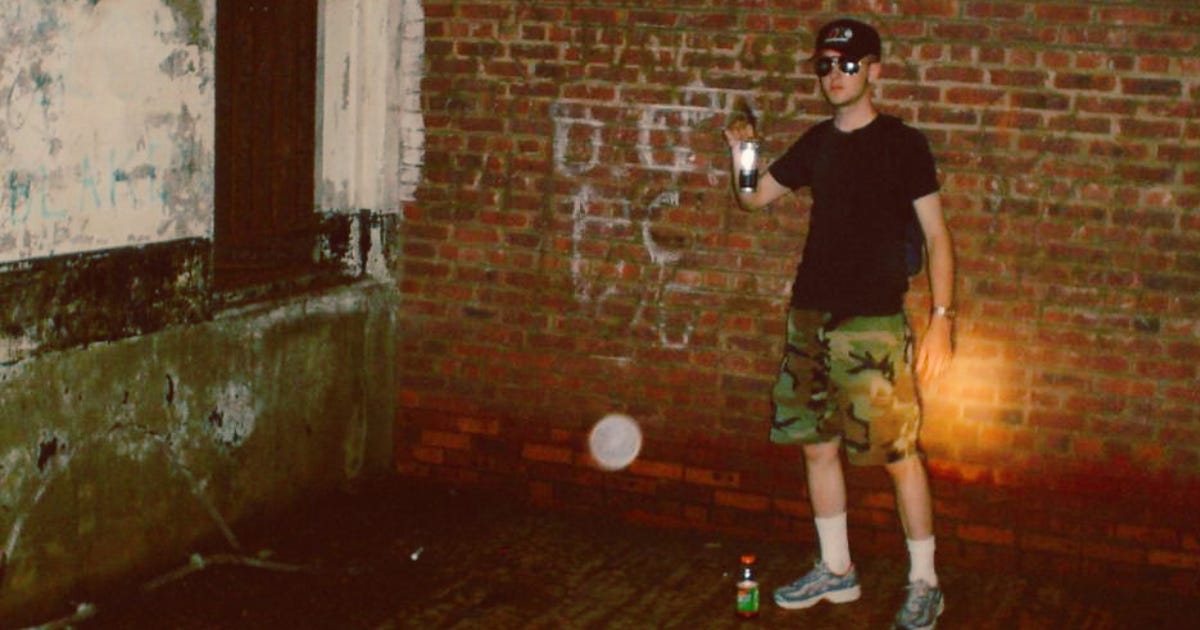
For as long as orbs have been offered up as possible evidence of the paranormal, other people have been explaining that they are usually far less dramatic than all that: dust, moisture, pollen, insects, droplets, lens effects, flash reflecting off particles too close to the camera. In most cases, the mystery is not especially mysterious. And yet the ghost orb lives on. It drifts cheerfully through ghost-hunting television, online spaces, and the occasional earnest email from somebody wanting to know if the glowing disc in their Nan’s sitting room might be Grandad dropping by.
At this point, I’m less interested in asking what ghost orbs are than why they have proved so culturally durable.
Because that, really, is the story. Not the orb as evidence, but the orb as survivor. As one of the great persistent motifs of modern paranormal culture, and an example of what happens when technology, interpretation, and atmosphere collide and produce something people are reluctant to let go of.
Like it or not, the ghost orb is here to stay. And the fact that it is here to stay tells us quite a lot - not necessarily about the dead, but certainly about the living.
A modern ghost story in photographic form
One of the easiest mistakes to make with something like the ghost orb is to treat it as though it belongs only to the argument over whether it is real. That matters, of course, up to a point. But it is also much too narrow.
The more useful way to think about the orb is as a piece of modern folklore.
Folklore is not only made of ancient legends, rural warnings, and stories old enough to have worn smooth around the edges. It is still being made now. It forms around technologies, subcultures, shared anxieties, recurring images and motifs, and repeatable little moments of uncertainty. Give people a strange thing that appears often enough to become familiar, and before long a story will begin to gather around it.
That is more or less what happened with the orb.
A photographic artefact - usually quite ordinary in origin - became a paranormal sign through repetition. People saw strange circles in photographs, yes, but more importantly they learned how to interpret those circles. Books, websites, ghost-hunting shows, online forums, and years of recycled paranormal language helped turn the glowing dot into a recognisable category. It was no longer just a quirk in an image. It was an orb. And once something has a name, a visual identity, and a story attached to it, it becomes much harder to dislodge.
This is one of the reasons the orb has had such a long shelf life. People are not coming to it fresh every time. They’re not simply looking at a white blur and inventing meaning from scratch. Instead, they are seeing something culture has already taught them to recognise.
The orb arrives pre-loaded with significance.
Which is how folklore works. It teaches people what kind of thing they are looking at. And in that sense, the ghost orb belongs to a much older tradition than its digital trappings might suggest.
Every era seems to produce its own visually persuasive form of supernatural evidence. Earlier periods had spirit photographs, ectoplasmic drapery, mysterious extra faces, ghostly smudges, and vague luminous forms. The tools change and the style changes but the human impulse behind it does not. We remain deeply attracted to the possibility that the camera, somehow, has caught more than we did.
The digital age did not invent that longing. It just gave it a nice round shape.
Why the orb feels persuasive
Part of the orb’s enduring appeal lies in a very ordinary fact: photographs carry authority.
Even now, with all we know about how easily images can mislead, photographs often feel more factual than they really are. They look like proof. Something was in front of the camera, after all. Something made that mark. Something was captured.
But photographs are never just neutral slices of reality. They are shaped by light, angle, motion, focus, timing, hardware, software, depth, surface, reflection… and whatever else happened to be going on in the environment at the time. They do not lie exactly, but neither do they simply present the world as it is. They translate it. Sometimes they translate it beautifully, sometimes badly. And sometimes they produce exactly the sort of oddity that people are primed to find meaningful.
The orb is one of those oddities.
It works because it has enough visible form to seem evidential. It is there in the image, apparently concrete, observable, and seemingly independent of the person who took the photo. A funny feeling can be dismissed and a story can be questioned, but a photograph feels like a record. It can be shown, enlarged, circled, posted online, sent to friends, revisited years later. It gives people something to point to.
At the same time, the orb is ambiguous in exactly the right way. It is not usually clear enough to settle anything, but it is clear enough to invite speculation. It offers just enough shape to feel significant and just enough uncertainty to keep the argument alive.
That is a very potent combination.
Human beings are excellent at building meaning from ambiguous things. That is not just a paranormal problem. It is one of the ways we move through the world. We notice patterns, lean on context, connect details, fill in gaps, and interpret uncertainty through the lens of what we already know, suspect, hope, or fear. The orb slips neatly into that process. If you already think a place is haunted, or if a particular image arrives in an emotionally charged context, it does not take much for a pale floating circle to start feeling like more than a camera artefact.
The orb may not be especially strong evidence. But it is very good at looking like the sort of thing evidence might resemble.
The orb and the limits of visual literacy
If the orb is folklore, it is also a lesson in media literacy - or, more to the point, in how shaky media literacy often is.
One of the stranger features of modern life is that we are surrounded by images while remaining remarkably under-equipped to interpret them. We swim in photographs, screenshots, clips, CCTV stills, compression artefacts, edited images, decontextualised frames, and now AI-generated nonsense too, and yet many people still approach images as though they arrive bearing self-evident truth.
The ghost orb is a small but useful reminder that they do not.

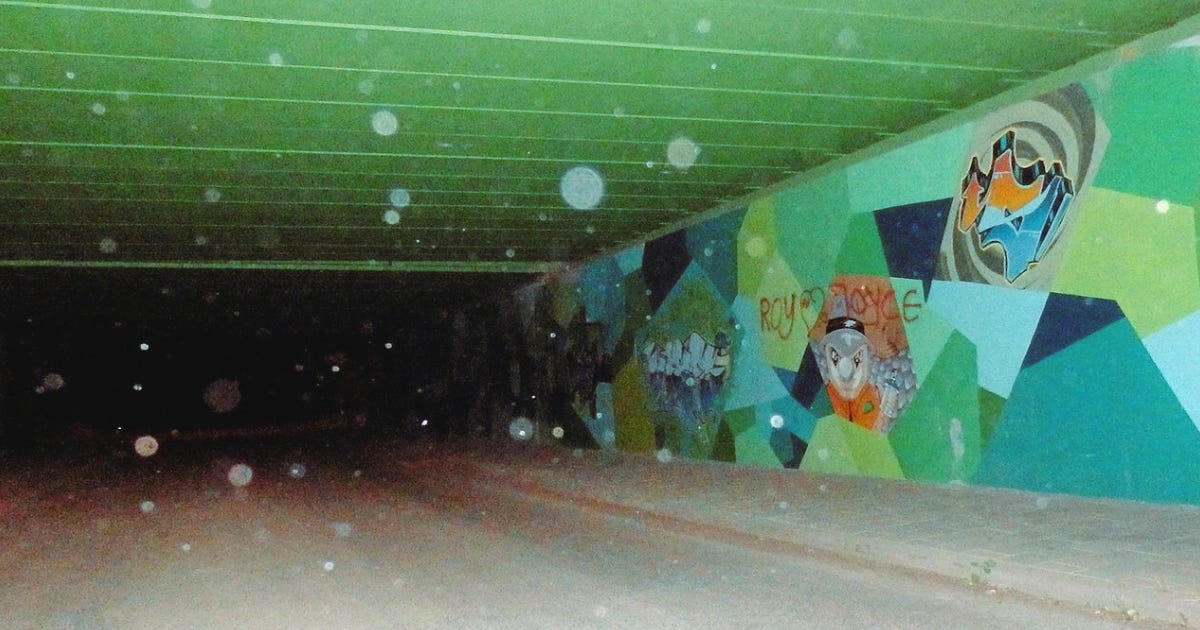
So many orb photographs can be traced back to very ordinary physical causes: airborne dust, moisture, pollen, tiny insects, flash bouncing off particles too close to the lens, droplets in the air, marks on the lens, all caught in conditions where a camera is already struggling to make sense of darkness and contrast. None of that is exotic. But unless you have some sense of how cameras behave, it often does not feel intuitive either.
What feels intuitive is the image itself. There is a bright circle. It appears suspended in the frame. It does not look like dust in the way dust exists in the imagination - dry, dull, settled, ignorable. It looks luminous. Distinct. Worth noticing.
And because many people still treat photographs as straightforward witnesses, the image gets taken too literally. The result of flash and proximity becomes a floating object. A lens artefact becomes an external thing. A camera quirk becomes, if not a spirit, then at least the possibility of one.
Again, this is not a problem unique to paranormal belief. It is a human problem, and increasingly a general cultural one. The orb simply shows it to us in miniature. It demonstrates how easily a misunderstood image can become a meaningful claim once the technical context drops away and a ready-made story steps in to fill the gap.
That, to me, is one of the reasons the orb remains useful to think about. Not because it is compelling proof of ghosts, but because it reveals how much interpretive work people do - often without realising it - when they look at a picture.

From evidence to icon
There is another reason the ghost orb has survived so well, and it is perhaps the most revealing of all: the orb is no longer just evidence. It is iconography.
At some point, it stopped functioning only as a claim and started functioning as a symbol.
You do not have to believe in ghost orbs to recognise what they are supposed to mean. A dark room filled with floating pale circles announces itself immediately as belonging to the visual world of haunting. It tells you what genre you are in. It evokes ghost hunts, old buildings, whispered excitement, late-night vigils, and all the familiar staging of paranormal media. The orb has become part of the aesthetic language of the supernatural.
It sits alongside green night vision, torchlit corridors, static on an audio recording, EMF meters glowing theatrically in the dark, thermal silhouettes, and the soft visual grammar of “something may be happening here.” These things do not merely document paranormal culture, but help create it. They are part of its look, its mood, and its branding.
And once something reaches that point, its survival no longer depends on whether it stands up well as evidence.
This is where the orb becomes especially interesting. It has moved beyond the question of proof and into the realm of recognition. It is now one of those images that says ghosts almost instantly, even to people who would never treat it as compelling data. It is useful. It signals atmosphere. It suggests uncanny presence. It belongs to the furniture of the genre.
In other words, the orb has done what a great many pieces of poor evidence never manage: it has become culturally indispensable.
There is something faintly admirable about that. Not evidentially admirable, perhaps, but aesthetically. The orb has had a remarkable little afterlife. A photographic nuisance wandered into paranormal culture and somehow secured permanent residency.
Why the usual rebuttal never really finishes the job
None of this means the mundane explanations are wrong. They are often exactly right. But being right and being effective are not always the same thing.
One reason the orb persists is that sceptical responses to it are frequently too thin to deal with what is actually going on. “It’s just dust” may explain the mechanism perfectly well, but it often fails to address why the image mattered in the first place.
People rarely bring orb photographs to others as purely technical puzzles. They bring them because the image sits inside a larger emotional or narrative context. They were already uneasy in that building. They had a strange experience before taking the photo. The image was captured in a place with personal meaning. It appeared after a bereavement. It feels charged and like it belongs to a story.
A flat explanation can dismantle the optics while leaving the significance untouched, and this is where a lot of sceptical communication goes wrong - not just with orbs but with paranormal claims more broadly.
It focuses narrowly on mechanism and treats context as irrelevant, when context is often the entire reason the claim has any grip at all. People are not only asking “what caused this?” They are also asking “what do I do with how this feels?” and “am I wrong to think this matters?”
If those questions are ignored, the belief may remain perfectly intact, orb and all.
The orb, then, survives not because it is unbeatable, but because it is culturally and emotionally well-positioned. Believers often overread the image while sceptics often underread the human being looking at it. Between the two, the ghost orb continues to float serenely on.
What the ghost orb tells us now
The ghost orb may not tell us much about the afterlife but it tells us a great deal about the culture of haunting.
It tells us that folklore did not stop evolving when technology arrived. On the contrary, technology gave it new surfaces on which to bloom. A camera artefact became a ghost story because enough people learned how to read it that way.
It tells us that visual literacy matters, and that we are often less confident readers of images than we like to imagine. Cameras do not merely capture the world. They interpret it mechanically, imperfectly, and sometimes misleadingly. When people forget that, ordinary artefacts can begin to look uncanny very quickly.
And it tells us that paranormal culture, like any other culture, develops its own symbols. The orb has lasted because it is no longer just a claim about what might be in a photograph. It is part of the recognisable visual language of ghost belief itself.
That is why I do not think the orb is going anywhere.
Not because it has won the evidential argument or because sceptics have failed to explain it. But because it now performs too many cultural functions to disappear neatly. It is folklore. It is misread media. It is aesthetic shorthand. It is one of the ways modern ghost culture recognises itself.
For something so often dismissed as a speck of dust, that is quite an achievement.
Excellent article. As someone who is open-minded about "ghosts" and the paranormal, but sceptical regarding orbs, this has flagged up their cultural significance beautifully. A concept I hadn't considered.
Brilliant analysis. I so appreciate your insightful content and engaging writing. As promised, I've assigned several of your pieces in my undergraduate seminar and the students are big fans! 😊