

The Stories The Night Tells Us
Sleep Paralysis, Nightmares, and the Stories We Learn from the Dark

For many people, the night is not neutral.
It is not merely the backdrop to rest, dreams, or the body quietly getting on with repair. It is the hour of creaks and shadows and too much awareness. The hour in which the mind, untethered from daylight logic, starts reaching for meaning in every sound.
I know that feeling very well.
For several years, I often put off going to sleep as long as I could because I knew what was waiting for me when I got there: nightmares. Not the occasional bad dream that leaves you rattled for a moment, but recurring, exhausting, horrible dreams that left me feeling more tired in the morning than I had when I went to bed. Sleep was not restorative. It was adversarial. It was something to brace for and I would wake up trying to work out what it all meant. What kind of person I was to always be fighting such terrible things when I should have been resting.
In truth, my fear of the night began much earlier than that. As a child, I dreaded bedtime because I believed our house was haunted and I’d end up laying in bed overly alert, listening out for the noises that proved it. The dark made everything feel charged. Every shift in the house seemed meaningful. Every sound felt like evidence. Long before I had any useful language for nightmares, parasomnias, or the strange mechanics of the sleeping brain, I knew what it was to be afraid of what night might bring.
During my ASD assessment a few years ago, the psychologist clocked something in passing that turned out not to be small at all: nightmare disorder. Nightmare disorder is a recognised parasomnia involving recurring nightmares that cause distress, disrupt sleep, and affect daytime functioning. I hadn’t known it was a disorder and thankfully treatment eventually did something I had not realised I was still quietly hoping for. It stopped the relentless nightmares, and also stopped my lucid dreaming.
My nights have become less punishing,
I think my lifelong experience with nightmares and lucid dreaming has made the paranormal experiences that happen in the porous territory around sleep and arrive while someone is falling asleep, or waking up, or trapped somewhere in between the most compelling to me as a researcher.
The shadow at the bedside, a sense of a presence in the room. The dream that feels so invasive, so vivid, so emotionally real that it lingers all day like weather. I know what it is to be afraid of the night and for sleep to feel less like refuge than surrender.

I recently read Rahul Jandial’s This Is Why You Dream, which offers fascinating insights into the neuroscience of dreaming. What stayed with me most, though, was not simply the science for its own sake, but the usefulness of it: the possibility that some of the most frightening experiences people have at night are not made smaller by explanation, but more navigable, legible and less cruel.
That matters, particularly in paranormal spaces, where sleep-related experiences have such a long and culturally sticky afterlife. A figure in the room, a force that pins you down, or the conviction that something was there. Historically, people have understood such things through the cultural language available to them: ghosts, goblins, incubi, demons, aliens. And of course they have. These experiences do not feel abstract or metaphorical when they happen but instead feel immediate and bodily. And very real.
That is one of the reasons I have little patience for the lazy version of scientific scepticism that treats explanation as deflation. As if saying ‘the brain did it’ should end the conversation. The brain is not a dull answer and it should never be offered as a reductive solution to the vividity of human experience. The brain is where these haunting experiences happen and the fact that an event may have a neurological basis does not make it less uncanny. If anything, it can make it more so.
Take sleep paralysis as an example.
Sleep paralysis is a temporary inability to move or speak that happens as someone is falling asleep or waking up. During an episode, part of the brain has surfaced into awareness while the body remains caught in the muscle paralysis associated with REM sleep. It is often accompanied by vivid hallucinations, intense fear, chest pressure, and the overwhelming sense that another presence is nearby. Sometimes malicious. It is difficult to imagine a more efficient machine for producing ghost stories.
The details vary by culture and expectation, but the underlying structure remains strikingly familiar. Something is in the room, something is watching, it is pressing on you. Something is not right and you are in danger. Across centuries, people have populated this shape with whatever entities made sense to them. The night hag. The incubus. The demon. The intruder. The alien visitor. But the human experience underneath those interpretations is recognisable enough that it almost feels like its own folklore template - one written partly by culture, yes, but also by the sleeping body.
What I found most valuable in Jandial’s discussion of sleep paralysis was not only the possible neuroscience behind it, but the advice for getting through it. When panic begins to climb, he suggests closing your eyes and reminding yourself that this is a bodily experience, not a supernatural one.
I think that is powerful.
Not because it transforms sleep paralysis into something pleasant, or tidy, or easy to dismiss. But because panic loves narrative. The moment the brain reaches for something is here, terror expands to fill the room. And if sleep paralysis is, in effect, a misaligned overlap of wakefulness and dreaming - if consciousness has returned before the body has fully caught up - then one of the most useful things a person can do may be to interrupt the story before it hardens. This is temporary. This is my body. This is frightening, but known.
There is something deeply humane in that reframing. It does not mock the fear but honours it while refusing to hand it a demon mask.
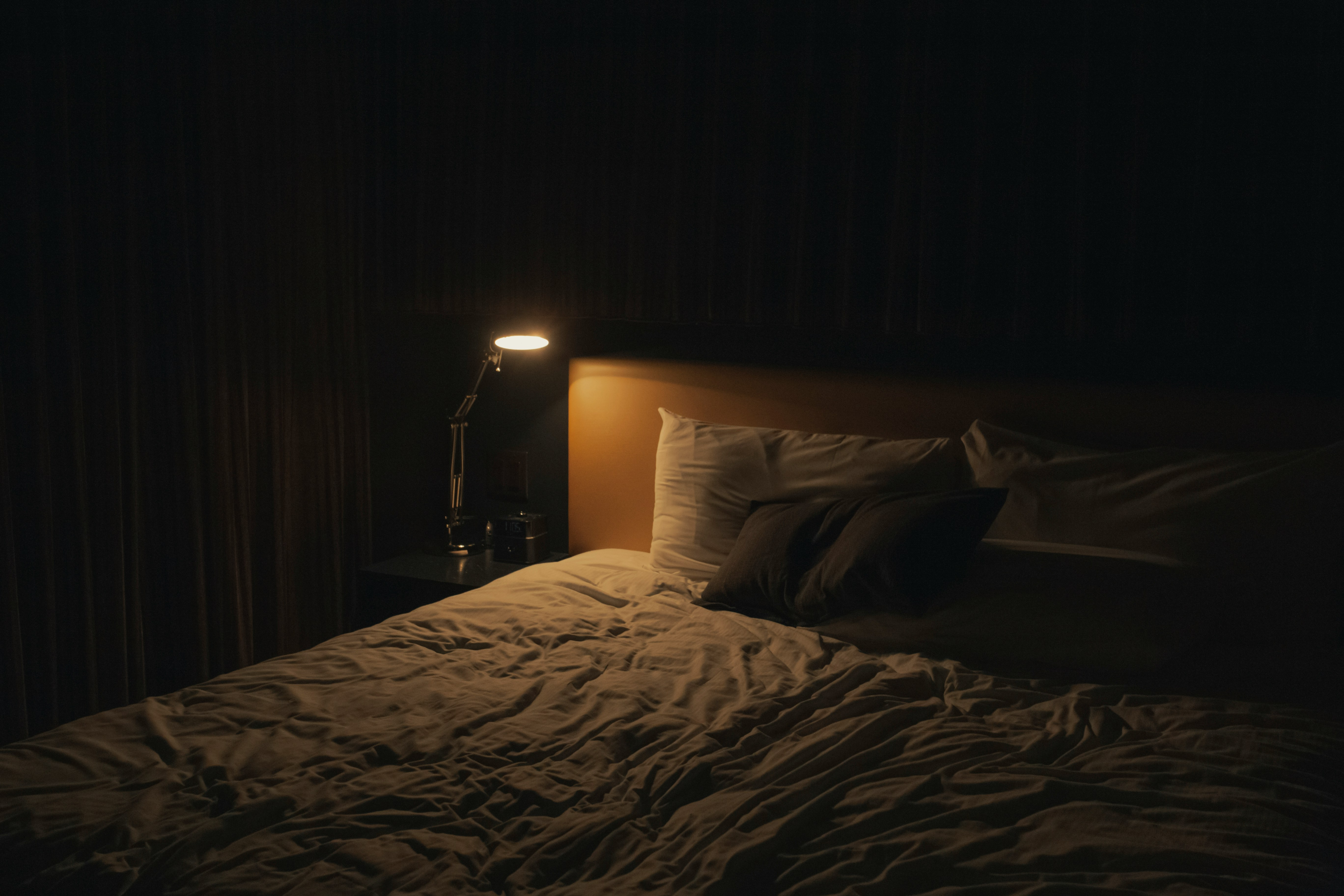
This is one of the places where science perspectives can be actively kind by offering language that does not belittle the experience, but does loosen its supernatural inevitability. If you know that sleep paralysis is a known phenomenon, that sensed presences and chest pressure are common features, that the event will pass, then the fear may still be there, but it is no longer quite so total. The night has not opened up to swallow you whole. Your nervous system is doing something alarming, but not unknowable.
Nightmares, of course, operate differently. They do not pin you in place between states. They drag you fully under.
Bad dreams are ordinary. but nightmare disorder is something else. When nightmares recur often enough to disrupt sleep, worsen mood, make a person dread bedtime, or impair how they function the next day, they stop being an occasional bit of nocturnal unpleasantness and start becoming a health issue. For people living with that pattern, the sleeping mind can begin to feel almost hostile. Not mysterious in an enticing way, but punitive. Treacherous. A place you are forced to visit even when you know it will hurt you.
That is why I was glad to see imagery rehearsal therapy mentioned as a response to nightmares. Imagery rehearsal therapy, or IRT, is an evidence-based approach in which a recurring nightmare is rewritten while awake into a less threatening version, then mentally rehearsed. NHS and hospital guidance describe it as a well-supported treatment for recurring nightmares and nightmare disorder. There is something almost radical in that idea: not because it promises mastery, but because it rejects inevitability.
The nightmare is not sacred, or untouchable. It is not necessarily a prophecy, or a punishment, or a truth serum administered by the unconscious. Sometimes it is a loop. A script. A pattern that has been carved too deep and fires too easily. And sometimes, with the right support, it can be interrupted.
That fascinates me, especially in the context of the paranormal, because night-time experiences are so often handed immediately to the supernatural. I understand why. Night is when the borders feel thin and the self is less stable, less defended, less able to insist on the ordinary. A dream can feel like visitation. Sleep paralysis can feel like assault. A half-waking presence can feel more convincing than anything daylight could possibly explain away.
But convincing is not the same thing as external, and I think that distinction matters.
Not because I want to flatten every eerie night-time experience into a diagnosis or a neurotransmitter problem. That would be as unhelpful, in its own way, as declaring every strange sensation proof of haunting. What interests me is the overlap: the space where fear, physiology, culture, memory and imagination all meet. The place where the brain’s talent for storytelling can turn the bedroom into a stage set for terror, and understanding the mechanisms behind this does not destroy mystery, but changes its scale.
That has always been, to me, one of the most compelling lessons in the science behind the paranormal. Human beings are not passive cameras but instead embodied meaning-makers. We dream, misperceive and fill in gaps. We feel things before we can name them, and bring old beliefs and personal history into the room with us. That does not make our experiences trivial. It makes them richly, sometimes painfully, human.
Understanding nightmares and sleep paralysis through a neuroscientific lens is not simply information to consider but a frame through which to see frightening night experiences as real without seeing them as supernatural by default. It enables you to take them seriously without surrendering to them and to understand that fear at night can be ancient and bodily and culturally freighted all at once.
The night is very good at telling stories. Some of them come from old houses and older beliefs. Some come from the strange theatre of the sleeping brain, and some come from the collision between the two.
But if you have ever delayed going to bed because you knew what waited for you there, then language matters. Explanation matters. Relief matters.
Sometimes the most compassionate thing science can do is not strip the mystery away, but hand you a torch and say: here. This is frightening. But you are not alone in it. And there may be a way through.