

The NHS Hospice That Called In An Exorcist...
Why treating distress as a legit spiritual haunting can make things worse

Earlier this week, I was quoted in The Telegraph commenting on a story that sounded, at first glance, like something from a Victorian penny dreadful: an NHS hospice in Norwich had reportedly called in an “exorcist” after staff described seeing the ghost of a little girl in a red dress.
Predictably, the reaction online split into two camps.
On one side were people asking how on earth a modern health service could entertain something so “medieval”. On the other were people insisting that of course hospitals are haunted, because how could they not be?
What didn’t quite make it into the final article was the longer thread of thought behind my response. And that longer thread matters (in my humble opinion) because this story isn’t really about ghosts at all.
It’s about context, fear, and what happens when we treat distress as a supernatural problem to be solved.
Why certain places feel haunted
One of the things I said in my conversation with the science editor of The Telegraph is that it’s not unusual for people to link strange experiences to ghosts in places where we’re forced to confront mortality.
Hospices, hospitals, funeral homes, care homes, prisons, old institutions tied to illness or death. These are environments where people are under extreme emotional strain, sleep is disrupted, routines are unfamiliar, lighting, sounds, and smells are different from normal domestic spaces. Anxiety is high, control is low, and historical and social context are pressing down from all sides.
Psychologists have long noted that “magical thinking” increases during periods of uncertainty and stress - not because people become stupid, but because the human mind uses pattern-making, meaning-seeking processes to make sense of the world around us every single second of the day.
When we are frightened, we look for explanations. And a setting already loaded with cultural stories - “children’s hospital”, “old ward”, “hospice” - creates the perfect conditions for suggestion to do its work.
That doesn’t mean people are lying, or even that they’re wrong about what they experienced! We just have to clock the fact that their experiences are being interpreted through a lens that already expects something unusual.
When “solving” the haunting makes things worse
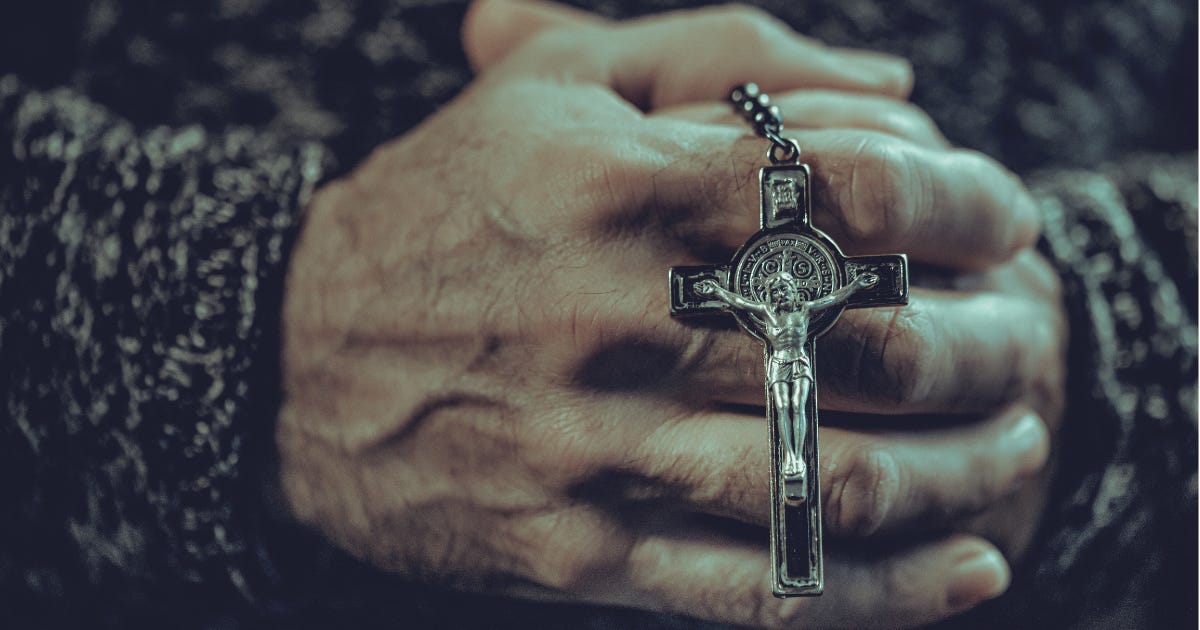
In the Norwich case, the response was to involve deliverance ministers - what most people would call exorcists - and to perform a blessing with holy oil, reportedly to calm staff and patients.
Personally, as a paranormal researcher, I advise people not to take this route. However, I understand why that happened, but I’ll come back to that.
There’s a risk here that rarely gets talked about and it is the part of these stories that worries me most - the part that tends to get lost when the focus stays on whether ghosts are real or not. Because when an exorcist, deliverance minister, or spirit medium is brought in, and a blessing or cleansing is performed, something very predictable often happens.
Things calm down.
The atmosphere feels lighter, people sleep better, anxiety drops. Staff feel supported and (importantly) listened to. The building feels different.
From the outside, this looks like a success, but what’s actually happened is that the emotional temperature has changed, not the underlying conditions.
Whatever caused the experiences in the first place - creaking floorboards, temperature fluctuations, lighting conditions, exhaustion, grief, stress, psychological priming, misidentification, a hoax, or any combination of the above - has not been explored or resolved. The cause is still there. It’s just quieter for a while, because people feel safer and frame things differently in their minds.
And then eventually - because buildings still make noises, because humans still misperceive things, because stress and fatigue come back - the experiences start up again. And this is where the real harm can begin, because at that point, the blessing hasn’t just failed. In the mind of the person experiencing the phenomena, it has proven something.
If the experiences stopped after the cleansing, then whatever was causing them must have been supernatural, right? And if they’ve started again, then the ghost - or spirit, or entity - must have returned.
The blessing becomes confirmation, not comfort.
From there, it becomes extraordinarily difficult to help someone reinterpret what they’re experiencing. Any attempt to talk about environmental causes or psychological factors now feels like denial because the logic is airtight from the inside: we dealt with the ghost, it went away, and now it’s back.
I’ve worked on cases where people reached this point and became far more frightened than they were at the beginning. One person needed sleeping tablets just to get through the night. Another became hyper-vigilant, constantly scanning their home for signs of activity. Their world narrowed around the haunting and eventually they had to move house.
And that’s the tragedy of it.
An intervention that felt kind, calming, and respectful in the short term can end up locking fear into place in the long term - because it reframes ordinary, explainable phenomena as evidence of something hostile and external. It adds to the narrative that the spooky stuff is unnatural and supernatural.
Once that frame is set, it’s incredibly hard to undo.
And yet… I still get why people turn to religion

Despite all of the above, I’m not sitting here rolling my eyes at terrified hospice staff or mocking people for seeking help from the church. I don’t believe in ghosts or gods myself - but I get it.
Underneath the lizard scales, I am a human too. If I were working long shifts in a hospice during or just after a pandemic, surrounded by death, uncertainty, and emotional overload - and something strange happened - I’d probably want someone to make it stop as well.
When someone is frightened, exhausted, grieving, or overwhelmed, what they are often looking for isn’t an explanation. They’re looking for comfort.
In those situations you need someone to tell you they believe you and don’t think you’re crazy. Someone who is a figure of perceived authority, who says calmly that you’re not alone, this can be dealt with, and that you’re safe.
The go-to for that is rarely a skeptic ghost investigator. (🥺)
From that perspective, a religious blessing or spirit cleansing functions a bit like a placebo.
Even The Telegraph’s follow-up piece from a deliverance minister’s perspective makes this clear, whether intentionally or not. Much of the work described isn’t dramatic Hollywood exorcism, but reassurance, listening, prayer, and creating a sense of order where things feel chaotic .
The problem isn’t compassion. The problem is what story we tell about why it’s happening.
The uncomfortable middle ground
So where does that leave us?
Ideally - theoretically - we’d take the time to investigate strange experiences carefully, patiently, and without defaulting to supernatural explanations. We’d look at environmental factors, psychological ones, social ones. We’d support people without reinforcing fear.
In reality, that takes time, money, training, and emotional labour - all things in short supply, especially in healthcare settings.
Which is why stories like this keep happening.
Not because ghosts are real but because fear is real. Grief is real. Stress is real. And humans will always reach for meaning when the ground feels unstable beneath them.
The challenge - for sceptics, clinicians, journalists, and non-belivers and believers alike - is to respond to that fear without accidentally making it worse.
Because the most haunting thing in these stories is never the ghost.
It’s the distress sitting underneath it.
Ha ha I got quoted in The Times on this story!