

Everybody Wants Their Own Enfield
and I'm not sure that's okay actually...

Recently, while talking to someone about my interest in paranormal research, they said something that lodged itself in my head.
What I needed, they said, was “one big case.”
It was meant kindly, I think. Encouragingly. The kind of thing people say when they can see you working a field but do not yet know what shape your involvement takes. In their mind, the big case was the thing that would crystallise everything: interest, expertise, credibility, direction. It would give my work a centre of gravity.
At the time, I laughed politely. It was not an unreasonable comment, exactly. Many fields have their own mythology around the defining case. The journalist has the investigation that breaks a scandal, the academic the paper everybody cites, and the true crime writer has the case that reframes a tragedy for a wider audience.
But later, while brushing my teeth (which is often when my brain chooses to become annoyingly productive) I found myself thinking about ghost hunting, because paranormal culture has its own version of the big case.
Everybody wants their own Enfield.
Their own Borley Rectory.
Their own haunting that becomes more than a haunting. A case with a name and a mythology. A place in the books. A story that gets brought up in interviews, documentaries, podcasts, conference talks, and late-night conversations between people who know exactly how to lower their voice before saying, “There was this one case…”
In ghost research culture, the landmark case is not only evidence or mystery. It is status. It gives the investigator proximity to history and allows them to stand beside the haunting and become part of its afterlife.
That is fascinating.
It is also ethically uncomfortable.
The case as legacy
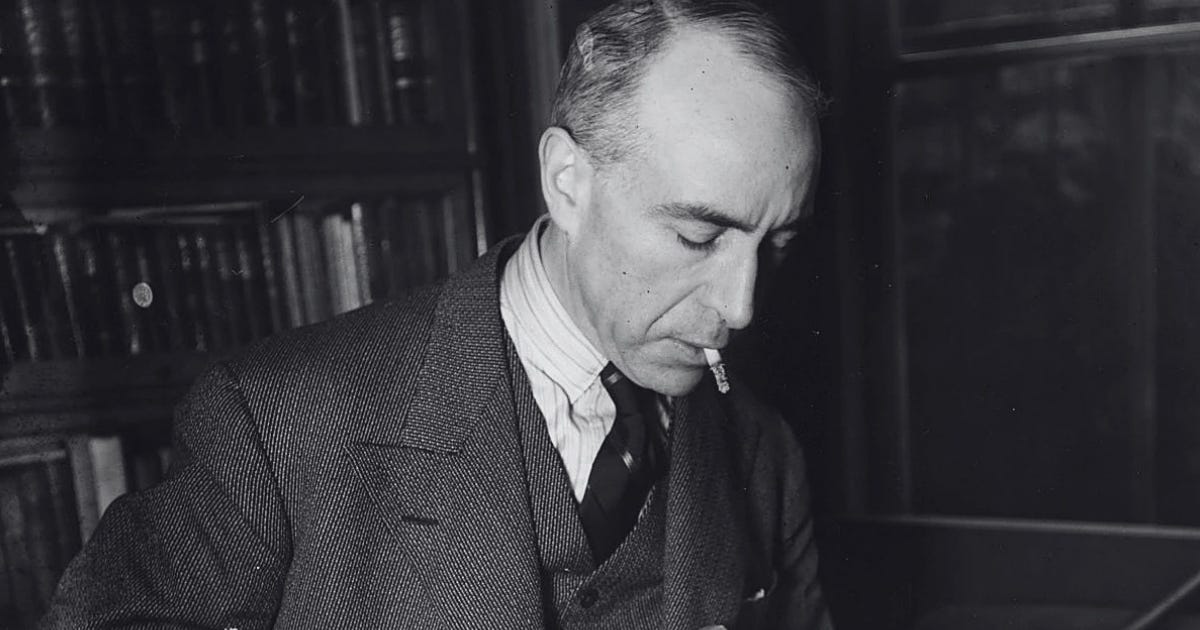
Paranormal history is full of cases that have become inseparable from the people who investigated, promoted, challenged, or wrote about them. Mention Borley Rectory and Harry Price appears almost immediately in the mental footnotes. Mention the Enfield Poltergeist and a whole cast of investigators, journalists, broadcasters, sceptics, and commentators gather around the story. The haunting becomes a cultural object, and the people attached to it become part of the object’s meaning.
There is nothing inherently suspicious about that. If someone spends time documenting a case, their name will naturally become associated with it - any field that records human experience does this. Researchers become linked to studies just as journalists become linked to investigations and campaigners become linked to injustices they helped expose.
The problem is not association. It is aspiration.
There is a difference between becoming known for careful work and wanting a case because of what it might do for you, and that distinction matters in paranormal culture because the people at the centre of haunting cases are often not powerful institutions or abstract subjects. They are families, children, people who are grieving, frightened, or isolated. Households under pressure. Their experiences may be sincere, confusing, frightening, exaggerated, misremembered, socially reinforced, misinterpreted, or some tangled mixture of all those things.
But they are rarely simple.
Yet the culture around hauntings often pushes towards simplification. A complex domestic situation becomes “the case.” A family home becomes “the house.” A person in distress becomes “the witness” or even “the epicentre.” Human ambiguity is tidied into narrative shape.
Once that happens, the case can begin to serve people who are not the ones living through it.
It can serve the investigator’s reputation. A podcast, or a YouTube channel. A book, a conference slot, a documentary, or a personal mythology. The haunting becomes a kind of professional inheritance, something a person can carry around with them as proof that they were there when something important happened. That they have made it as a paranormal investigator.
But if your legacy is built on another person’s most vulnerable moments, what exactly is being preserved? And who is it really for?
Branding the haunting
One of the clearest signs of this process is the way cases are named.
A haunting rarely remains a plain description for long. It becomes “The Hell House,” “The Demon House,” “The Something Poltergeist,” “The Black Monk,” “Britain’s Most Haunted X,” or some other title designed to make ambiguity sound like destiny.
This is not a neutral act.
Naming a case gives it shape and tells the audience how to approach it before they have considered a single detail. A sinister title creates expectation and it implies danger, seriousness, and narrative weight. It suggests that what happened is not merely strange, but significant.
A family reporting noises, apparitions, objects moving, cold spots, smells, dreams, or frightening coincidences may be describing experiences that deserve careful attention. But once their home has been branded, the meaning of those experiences is no longer being gently explored. It is being packaged.
The domestic becomes theatrical, the personal becomes public-facing, and the messy becomes marketable.
This is especially obvious in the age of online paranormal media. A careful, cautious title does not travel as well as one that promises terror. “Family Reports Disturbing Experiences During Period of Stress” is never going to compete with “The Most Evil House We Have Ever Investigated.” The algorithm does not reward careful uncertainty. It rewards escalation, certainty, dread, and the promise that this case is different from all the others.
So cases get bigger in the telling.
Not always because anyone is lying. Often because the culture rewards bigness. It rewards the dramatic frame, the ominous nickname, the sense that this haunting might be the one. The one that finally proves something, makes everyone take notice, and secures a place in the lineage.
That is where the ethical tension sits. Not necessarily in outright deception, but in the gradual transformation of somebody’s lived experience into someone else’s cultural capital.
Vulnerability is not a plot device
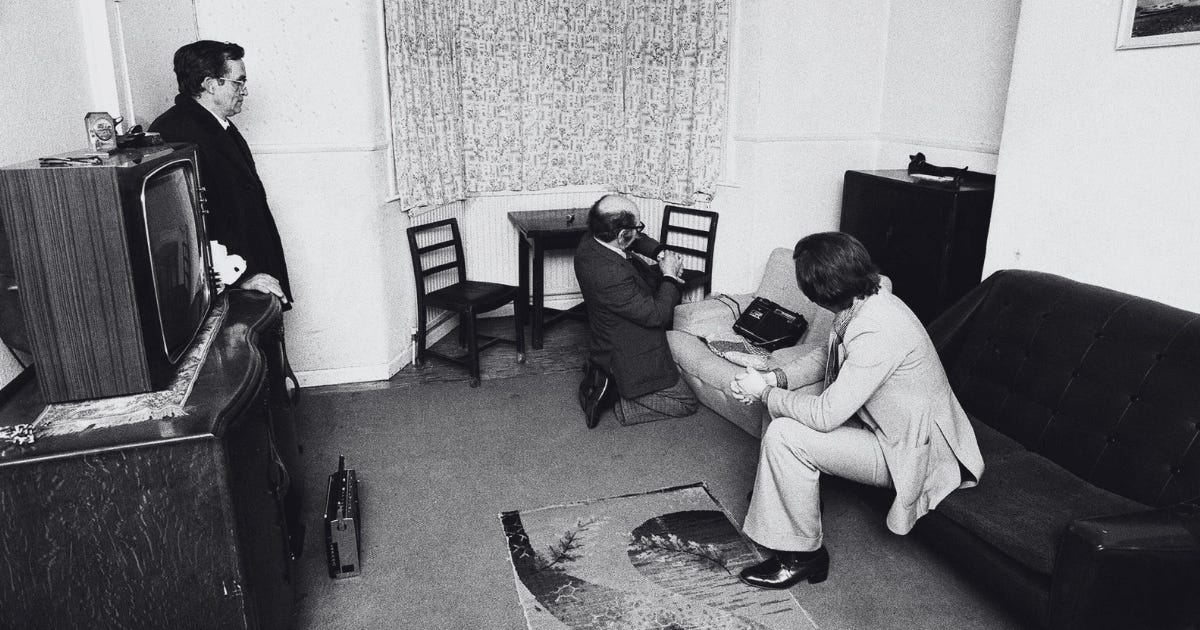
The people at the centre of haunting cases are often treated as if they are there to provide testimony, atmosphere, and emotional stakes. They become the reason the story matters, but not always the people whose wellbeing matters most.
That should trouble us.
Many reported hauntings emerge during periods of disruption. Bereavement, adolescence, family breakdown, illness, loneliness, religious anxiety, financial stress, trauma, and unstable housing can all shape the way people experience and interpret the world around them. That does not mean witnesses are lying, foolish, or unreliable in some simplistic way. It means they are human.
Human perception is not a CCTV camera. Memory is not a filing cabinet. Fear changes attention. Expectation changes interpretation. Repeated questioning can change recall, and group dynamics can reinforce certain explanations while quietly excluding others. A child who discovers that a particular detail makes adults react may learn, consciously or not, how to keep the attention coming. An adult who feels unheard may find that a paranormal explanation finally makes other people take their distress seriously.
None of this requires fraud.
That is precisely why it deserves care.
The lazy sceptical response is to treat vulnerability as evidence against a witness. The lazy believer response is to treat vulnerability as proof of paranormal victimhood. Both can be dehumanising. In one version, the witness is too unstable to be trusted and in the other, they are so haunted that every part of their distress is absorbed into the ghost story.
A more humane approach would start with the person rather than the phenomenon.
What is happening in this home? What pressures exist here? Who benefits from the haunting being understood in a particular way? Who feels believed for the first time? Who feels important? Who feels frightened? Who is being watched? Who is being ignored? What might publicity do to these people after the investigators have packed up their equipment and moved on?
Those questions are not as exciting as “is this the next Enfield?” yet they are much more important.
The investigator as central character
Paranormal culture often casts the investigator in a flattering role. They are brave, open-minded, sensitive, curious, and willing to enter strange situations that others dismiss. In many stories, the ghost hunter becomes a kind of advocate for the frightened household. They listen when others laugh. They offer explanations, rituals, advice, equipment, sympathy, and sometimes the immense relief of being believed.
There are investigators who do try to help. It would be unfair to pretend otherwise, but good intentions do not erase the possibility of harm.
An investigator can be sincere and still be intrusive. They can be compassionate and still enjoy the status a case gives them. They can believe they are protecting a family while also reinforcing the family’s fear. They can be convinced they are preserving testimony while slowly making the story harder for the witnesses to leave behind.
The investigator can become too important to the case.
This is one of the strangest dynamics in famous hauntings. Over time, the haunting is no longer remembered simply as something a household reported. It becomes a story with expert interpreters, defenders, sceptical opponents, favoured versions, forbidden doubts, and established lore. The original people remain central in theory, but the public conversation often belongs to others.
The case becomes a stage on which reputations are made.
Once that happens, there is a powerful incentive not to let the story become smaller. A haunting that becomes more ambiguous with time is not as useful as a haunting that becomes more legendary. A vulnerable household that needed support is less glamorous than a family at the centre of a battle between good and evil. A confused period in someone’s life is harder to sell than a terrifying case that shook investigators to their core.
The incentives are not subtle.
They may not always be conscious either, which is part of the problem. People are very good at mistaking their professional or personal investment for moral duty. The case must be defended because the witnesses deserve belief. The story must be promoted because the truth matters. The sceptics must be challenged because ridicule harms experiencers.
Sometimes those things may be true but they may also be convenient.
Borrowed importance
There is a particular kind of importance that comes from being near someone else’s crisis.
It can happen in true crime, in documentary-making, in journalism, in activism, in academia, and in paranormal investigation. A person enters a situation marked by fear, grief, confusion, or injustice, and because they are the one who records it, explains it, translates it, or publicises it, some of the emotional force of that situation attaches to them.
They become important because the story is important, but borrowed importance becomes dangerous when the storyteller begins to confuse access with ownership.
A haunting that happens in someone else’s home is not automatically yours because you investigated it. The fact that a case gave you purpose does not mean the case exists for that purpose, and this is where I think paranormal culture needs to be more honest with itself.
The desire for a landmark case is understandable. Most people want their work to matter. Many paranormal enthusiasts have spent years being mocked, dismissed, or treated as unserious. The idea of finding the case that proves the value of your interest is emotionally powerful. It promises vindication. It offers a way to say: this is why I kept going.
But the desire to matter can distort judgement because if an investigator needs a case to be significant, they may struggle to recognise when it is fragile, mundane, exaggerated, socially complicated, or ethically unwise to publicise. If their reputation becomes tied to the haunting, doubt can start to feel like personal attack. If their identity depends on being the person who saw the truth, alternative explanations may feel like attempts to erase them.
At that point, the vulnerable household is no longer the only thing being protected.
So is the investigator’s legacy.
Investigators often survive as names, personalities, pioneers, experts, eccentrics, or legends. Families are more likely to survive as case studies. Their homes become locations, their fear becomes atmosphere, and their private lives become context for the haunting.
The imbalance is striking.
A ghost hunter attached to a famous case may be remembered as bold, controversial, flawed, brilliant, or ahead of their time. The people who lived through the case may be remembered as frightened, fraudulent, troubled, suggestible, tragic, or simply “the family involved.”
That difference reveals something about whose stories paranormal culture values.
It is not that investigators should never be remembered. Some did important work. Some preserved accounts that would otherwise have vanished and asked serious questions in environments that did not reward seriousness. But involvement in a famous case should not automatically confer moral authority. Being present is not the same as being careful. Becoming part of a legend is not the same as having behaved ethically inside it.
We should be able to ask harder questions of the ghost hunters of the past.
What did their involvement do to the people at the centre of the case? Did they reduce harm or increase it? Did they protect privacy or encourage spectacle? Did they challenge the story when necessary, or did they become invested in its escalation? Did they help the household regain stability, or did they help turn instability into folklore?
These questions do not ruin paranormal history but make it more honest.
The legacy problem
This is the thought I keep returning to: what does it say about a person’s legacy if it depends on preserving someone else’s vulnerability as a story?
Not learning from it, helping or documenting with care, but preserving it in the amber of public fascination: offering paranormal audiences a tantalising peek behind the curtain of a real-life ghost story.
A haunting can become a strange kind of monument. It holds a family at a particular moment in time, often the worst or most confusing moment of their lives. The story is retold, reshaped, dramatised, defended, doubted, and revived. New generations discover it and new commentators reinterpret it. New investigators visit the location, if the location still exists, and the case remains alive in culture long after the original people have lost control of it.
For the investigator, that may look like legacy but for the people at the centre, it may look more like being trapped.
There is something profoundly questionable about seeking immortality through another person’s distress. Even when the haunting is fascinating and the witnesses are sincere. Even if the investigator means well, the ethical problem does not disappear just because the story is compelling.
Compelling stories are the ones most likely to be taken from people.
A different ambition
I do not think people should stop investigating strange experiences. That would be too blunt an answer, and not a particularly useful one. People will continue to have experiences they interpret as paranormal. Some will seek help. Some will want to be heard by someone who does not immediately laugh at them. Some will need practical support, environmental checks, emotional reassurance, or simply a calm conversation that does not make them feel foolish.
There is room for thoughtful investigation, but perhaps the ambition needs to change. Instead of chasing the case that makes your name, the better aim might be to leave people steadier than you found them. To treat privacy as a form of care and to resist branding someone’s home like a horror attraction.
A good investigation might never become famous.
It might not produce a book, a series, a conference talk, or a place in the paranormal canon. It might end with practical explanations, reduced fear, a few unresolved details, and a family who no longer feel as though their home is the centre of something monstrous.
That should not be considered failure.
If ghost research wants to be taken seriously as something more than content creation, it needs to develop a stronger sense of duty towards the people whose stories sustain it. Not just fascination, belief and the thrill of proximity to mystery.
The haunting is not only a story, it is someone’s life. And if your legacy is built there, on the frightened edges of someone else’s private world, then the least you owe them is the humility to ask whether your involvement helped them - or merely helped you become part of the legend.
Good post!!
This is a very thoughtful and important piece of writing. Leave people steadier than you found them – that's what to aim for indeed!